
How Much Does DC Fast Charging Cost? A Guide to Public Charging Rates
By Staff Writer · October 12, 2026
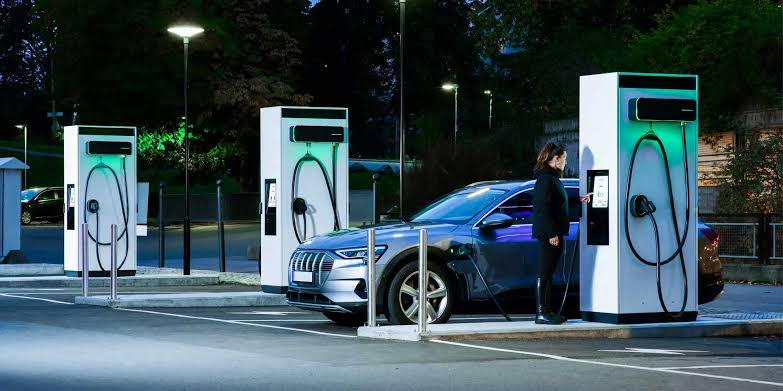
DC fast charging costs depend on the charging network, station location, electricity pricing, charging speed, and payment method. Unlike home charging, which typically uses a residential electricity rate, public DC fast chargers may apply per-kilowatt-hour pricing, per-minute fees where permitted, session fees, or additional charges under specific conditions. As a result, two charging stops that deliver a similar amount of energy can have different prices.
For electric vehicle (EV) drivers, understanding DC fast charging cost is especially important when planning road trips, commuting without home charging, or comparing charging networks. This guide explains how public fast-charging prices work, what affects the final bill, how to estimate the cost of a charging session, and how to find charging stations that fit your route and budget. Since rates vary and can change, always check the price shown by the charging provider before plugging in.
What Is DC Fast Charging?
DC fast charging is a public EV charging method that delivers direct current (DC) electricity to a vehicle’s battery. It can add driving range much faster than typical home AC charging, making it useful for highway travel and situations where drivers need to recharge quickly.
DC fast chargers are often found along major highways, at travel plazas, near shopping areas, and at dedicated charging hubs. Their power ratings vary, and a station’s advertised maximum output does not guarantee that every vehicle will charge at that speed.
The vehicle’s maximum charging capability, battery temperature, state of charge, and the station’s available power all affect charging speed. Many EVs also slow their charging rate as the battery approaches a high state of charge. Drivers often save time by charging enough to reach their next destination rather than waiting for the battery to reach 100%.
DC fast charging is commonly associated with road-trip charging, while home and workplace charging are often better suited to longer parking periods. The best option depends on access, convenience, charging prices, and how much energy the vehicle needs.
How Much Does DC Fast Charging Cost?
There is no single nationwide price for DC fast charging. In the United States, public fast-charging rates commonly fall within an illustrative range of approximately $0.30 to $0.60 per kWh, although some stations charge less or more. These figures are general examples, not verified live prices; actual rates depend on the provider, location, membership status, and pricing structure.
The total cost depends on how much energy your EV needs. For example, if a vehicle receives 40 kWh at $0.45 per kWh, the energy charge is $18 before any applicable fees or taxes. A larger session of 60 kWh at the same rate costs $27.
Charging networks may also offer subscription plans with discounted rates. These can be worthwhile for drivers who use the same network regularly, but the savings should be weighed against any membership fee. Occasional users may find that paying the standard rate is more economical.
Before starting a session, check the displayed price in the charging network’s app, at the station, or through the vehicle’s charging interface if supported. Confirm whether the listed rate applies to your payment method and whether additional charges may apply.
What Determines Public DC Fast Charging Rates?
Several factors influence the cost of a fast-charging session. Understanding them can help you compare stations more effectively and avoid unexpected charges.
Charging network and station operator
Different charging providers set their own pricing structures. Rates may vary between networks and even between stations operated by the same provider. A station’s location, operating costs, electricity tariffs, and pricing policies can all influence the amount drivers pay.
Location and electricity prices
Charging costs can differ by state, city, and individual site. Local electricity costs, property expenses, utility demand charges, and other operating factors may influence public charging prices. A station in one city may therefore charge a different rate from a comparable station elsewhere.
Membership and payment method
Some networks offer lower charging rates to members. Others provide pay-as-you-go access or roaming options through third-party apps. Payment through a roaming provider may have different terms from paying the station operator directly, so drivers should compare the applicable rates rather than assuming all payment methods cost the same.
Charging speed and vehicle capability
A charger advertised as delivering 150 kW or 350 kW does not mean every vehicle will receive that output. Your vehicle’s charging limits and battery conditions determine how quickly energy enters the battery.
The advertised power rating does not necessarily determine the session price. A station may charge per kWh regardless of the power delivered, while other pricing structures can make the time spent connected more relevant.
Session fees, idle fees, and taxes
The final bill may include more than the energy charge. Depending on the provider and location, drivers may encounter session fees, parking charges, taxes, or idle fees for remaining connected after charging finishes. Check the station’s terms before beginning a session.
How to Calculate the Cost of a DC Fast-Charging Session
When a station charges by the kilowatt-hour, the basic calculation is simple:
Charging cost = energy received (kWh) × price per kWh
For example, receiving 50 kWh at $0.40 per kWh costs $20. At $0.55 per kWh, the same amount of energy costs $27.50.
The amount of energy you purchase is not necessarily the same as the battery’s percentage increase. A battery’s usable capacity, starting state of charge, charging losses, and vehicle energy management all affect the relationship between energy delivered and range gained.
If the provider charges by time rather than energy, the calculation may depend on the number of minutes connected and the applicable rate. Because charging power can change during a session, estimating a time-based charge requires more than multiplying the charger’s maximum advertised power by the time connected.
For the most accurate estimate, use the provider’s current pricing and your vehicle’s charging information. If extra fees apply, include them in the calculation.
Example DC Fast-Charging Costs by Energy Amount
The following examples show how energy charges change at different illustrative rates. They exclude taxes, session fees, and other possible charges.
| Energy received | At $0.35/kWh | At $0.45/kWh | At $0.55/kWh |
| 20 kWh | $7.00 | $9.00 | $11.00 |
| 40 kWh | $14.00 | $18.00 | $22.00 |
| 60 kWh | $21.00 | $27.00 | $33.00 |
A driver who regularly needs 40–60 kWh during road trips may find that small differences in charging rates add up over multiple stops. Comparing prices along a route can therefore help reduce travel expenses, particularly for frequent long-distance drivers.
However, the cheapest station is not always the most practical. A slightly higher rate may be worthwhile if a station is directly on the route, has compatible connectors, or avoids a significant detour. Consider the full trip, including distance, waiting time, and station access.
Is DC Fast Charging More Expensive Than Home Charging?
DC fast charging often costs more per kWh than charging at home, although the difference depends on local residential electricity rates and public charging prices. Home charging uses electricity billed through a household utility account, while public fast-charging operators must cover equipment, installation, maintenance, site, and operating costs.
For illustration, an EV that consumes 0.30 kWh per mile would use about 30 kWh to travel 100 miles. At a home electricity rate of $0.16 per kWh, that energy costs $4.80. At a public fast-charging rate of $0.45 per kWh, the same 30 kWh costs $13.50 before applicable fees.
This comparison illustrates why home charging can be less expensive for routine driving. Actual costs vary with vehicle efficiency, charging losses, electricity rates, and public charging fees.
Drivers without home charging may rely more heavily on public stations. Workplace chargers, shared residential charging, and lower-cost public AC chargers may offer alternatives where available. The right approach is to compare the stations you can realistically access rather than assuming every driver can charge at home.
How to Pay Less for DC Fast Charging
You can often reduce public charging expenses by planning ahead and understanding the pricing options available.
- Compare rates before charging. Check the network’s app or station display for the current price and any additional fees.
- Review membership options. If you regularly use one network, compare the subscription cost with the potential savings on charging sessions.
- Avoid charging longer than necessary. For many road trips, charging enough to reach the next suitable station is more practical than waiting for a full battery.
- Check alternative stations along your route. A nearby charger may offer a lower rate or better availability, provided the detour does not offset the savings.
- Use home or workplace charging when practical. Lower-cost charging options can reduce how often you need public DC fast charging.
These strategies work best when balanced with travel time, battery needs, station reliability, and convenience. Never assume a price shown in an older review or online discussion is still current.
How to Find DC Fast Charging Stations and Check Prices
Before a trip, identify compatible charging stations near highways, destinations, and planned rest stops. An EV charging directory can help you explore stations by location, charging network, and charging category. Use the charging provider’s official app or station listing to confirm current prices, connector compatibility, operating status, and any access restrictions.
Drivers should also check whether a station supports their vehicle’s connector and charging standard. In North America, connector compatibility varies by vehicle and network, although adapters and network-specific access arrangements may be available for some vehicles. Verify compatibility for the specific vehicle and station rather than relying on the charger’s power rating alone.
Availability can change quickly at busy locations. Where live status information is offered, check it before arriving, especially during holidays and peak travel periods. Having an alternative station in mind can help avoid delays if a charger is occupied or unavailable.
Make Public Fast Charging Part of Your EV Budget
DC fast charging provides valuable convenience for road trips and drivers who need energy quickly, but its cost depends on more than the amount of electricity used. Network pricing, location, membership discounts, vehicle efficiency, and additional fees can all affect the final bill.
For many EV owners, combining lower-cost charging at home or work with public fast charging when needed offers a practical balance between affordability and convenience. Before each session, check the current rate and calculate the expected energy charge. Exploring nearby charging stations and comparing network prices can help you choose options that fit both your route and your budget.
Frequently Asked Questions
How much does it cost to fast charge an electric car?
The price varies by network, location, and energy required. As an illustrative example, receiving 40 kWh at $0.45 per kWh costs $18 before any applicable fees or taxes. Check the station's current pricing for an accurate estimate.
Is DC fast charging more expensive than Level 2 charging?
It often is, particularly compared with home Level 2 charging. However, prices vary by provider and location. Public Level 2 charging can also involve parking fees or other charges, so compare the total cost rather than the charging level alone.
Do DC fast chargers charge by the minute or by the kWh?
Many public chargers use per-kWh pricing, while some may use time-based or other pricing structures depending on local rules and provider policies. Always review the station's displayed rate and billing terms before charging.
Does a faster charger always cost more?
Not necessarily. The charger's maximum power rating does not by itself determine the price. The provider's pricing policy, location, and payment arrangement are more direct influences on the rate you pay.
Can I save money with an EV charging membership?
Yes, if the discounted charging rates offset the membership fee. The benefit depends on how frequently you charge with that network, the size of the discount, and any plan restrictions. Compare the full cost of membership with pay-as-you-go charging.
Why does my DC fast-charging session cost more than expected?
Possible reasons include a higher-than-expected per-kWh rate, taxes, session fees, time-based billing, parking charges, or idle fees. Review the session receipt and the station's pricing terms to identify the charges.
How can I find the cheapest DC fast charging near me?
Compare prices through charging network apps and EV charging directories, then verify the rate with the operator before starting your session. Consider connector compatibility, detours, availability, and any membership requirements alongside the listed price.
No reviews yet — be the first to share your experience.