
How EV Charging Works: Understanding Levels, Speeds, and Connectors
By Staff Writer · September 22, 2026
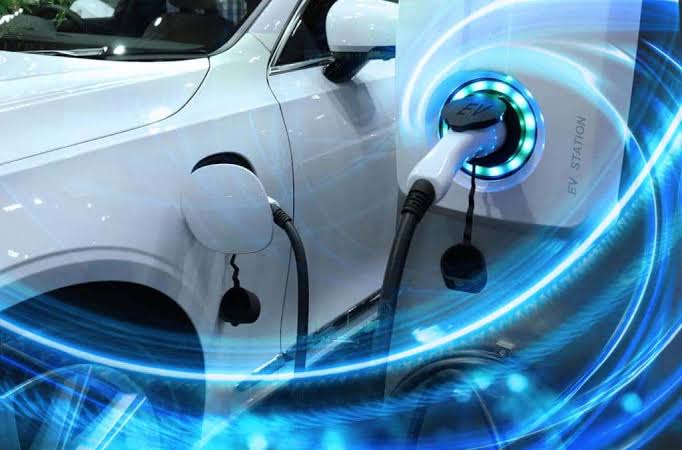
Electric vehicles have changed the way people think about fueling their cars, but many new drivers still wonder how EV charging works. Unlike gasoline vehicles that rely on a relatively standardized refueling process, EVs can charge through different power levels, connector types, and charging systems depending on the vehicle and charging location.
Understanding these differences can help EV owners charge more efficiently, choose the right equipment, and reduce unnecessary charging time. The charging system you use at home may be very different from the equipment available at a public fast-charging station.
This guide explains how EV charging works, including the differences between Level 1, Level 2, and DC fast charging. It also covers charging speeds, AC and DC power, common EV connectors, charging times, costs, battery management, and how to choose the right charging option for your driving needs.
How EV Charging Works
At its most basic level, EV charging involves transferring electrical energy from the power grid into the vehicle’s battery. However, several components work together during the process to ensure that electricity is delivered safely and at a rate the vehicle can accept.
When an EV is connected to a charging station, the vehicle and charger communicate with each other. The system checks that the connection is safe and determines how much electrical power can be delivered.
With AC charging, electricity from the electrical grid enters the vehicle as alternating current. The vehicle’s onboard charger converts that electricity into direct current so it can be stored in the battery.
DC fast charging works differently. The charging equipment converts the electricity before it reaches the vehicle, allowing direct current to be supplied to the battery at much higher power levels.
The vehicle’s battery management system continuously monitors factors such as battery temperature, state of charge, and charging conditions. It can adjust the amount of power being accepted to protect the battery and maintain safe operating conditions.
This means that the advertised power rating of a charging station does not necessarily represent the charging speed your particular vehicle will receive.
Understanding EV Charging Levels
EV charging is commonly divided into Level 1, Level 2, and DC fast charging. These categories help describe the type of electrical supply and the approximate charging capability of the equipment.
Level 1 Charging
Level 1 is the simplest form of EV charging. It generally uses a standard household electrical outlet and does not require the dedicated charging equipment associated with faster charging installations.
Because Level 1 provides relatively low electrical power, charging takes considerably longer than with Level 2 or DC fast charging.
For drivers with short daily commutes, Level 1 can still be practical. An EV parked for many hours overnight can gradually recover energy without requiring a higher-powered installation.
Level 1 can be particularly useful for drivers who have access to convenient overnight parking and do not regularly need to replenish large amounts of energy.
However, drivers with longer daily commutes or larger battery-electric vehicles may find Level 1 too slow for their regular charging requirements.
Level 2 Charging
Level 2 charging provides substantially more power than Level 1 and is one of the most common charging options for EV owners.
Level 2 equipment is widely used in homes, workplaces, apartment buildings, hotels, shopping centers, parking facilities, and other destinations where vehicles remain parked for extended periods.
For residential use, Level 2 charging can provide enough energy overnight for many drivers’ daily needs. It can also be useful when a vehicle needs to recover more energy in a shorter period than Level 1 allows.
The actual charging speed depends on the charger’s power output and the vehicle’s onboard AC charging capability. A higher-rated Level 2 charger does not automatically mean every EV will charge at that maximum rate.
Level 2 is therefore best understood as a category of charging rather than a single charging speed.
DC Fast Charging
DC fast charging is designed to provide much more electrical power than typical Level 1 or Level 2 charging.
It is primarily used for public charging, particularly at highway rest areas, travel corridors, commercial properties, and other locations where drivers want to minimize charging stops.
Unlike AC charging, DC fast charging bypasses the vehicle’s onboard AC-to-DC conversion process. The charging station performs the conversion and delivers DC power directly to the battery.
This allows compatible vehicles to accept substantially higher charging power.
DC fast charging is particularly useful during road trips because drivers can add significant energy during a relatively short stop. However, charging speed still depends on the vehicle, battery temperature, battery state of charge, and the capabilities of the charging station.
How EV Charging Speeds Are Measured
Charging speed can be confusing because several different measurements are involved.
Charging equipment is commonly described using power in kilowatts, or kW. The higher the available power, the greater the potential rate of energy delivery.
However, kilowatt ratings should not be interpreted as a guaranteed amount of driving range added per hour.
For example, two EVs connected to the same fast charger may receive different amounts of power because their batteries and charging systems have different capabilities.
The amount of range added also depends on the vehicle’s efficiency. An EV that uses less energy to travel a given distance may gain more driving range from the same amount of electricity than a less efficient vehicle.
This is why charging speed is better understood through several factors rather than a single number.
What Determines EV Charging Speed?
Several factors determine how quickly an EV charges.
Charger Power
The charging station has a maximum power output. A Level 2 station may provide considerably less power than a high-powered DC fast charger.
However, the vehicle may not be able to use all of the available power.
Vehicle Charging Capability
Every EV has charging limits determined by its onboard charging hardware and battery system.
For AC charging, the onboard charger determines how much power the vehicle can accept.
For DC fast charging, the vehicle has a separate maximum DC charging capability.
This means that connecting a vehicle to a more powerful charger does not necessarily increase charging speed beyond the vehicle’s own limit.
Battery Size
Battery capacity also affects how long it takes to add a given amount of energy.
A larger battery may require more electricity to reach a particular percentage of charge, although charging time is not determined by battery size alone.
State of Charge
An EV generally does not charge at its maximum rate throughout an entire charging session.
Charging can be fastest when the battery has a lower state of charge. As the battery approaches a higher state of charge, the vehicle typically reduces the amount of power it accepts.
This charging pattern helps manage battery temperature and protect the battery.
As a result, charging from a low state of charge to around 80% can often be much faster than charging from 80% to 100%.
Battery Temperature
Temperature can also affect charging performance.
A battery that is too cold or too hot may not accept energy at the highest possible rate. Modern EVs use thermal-management systems to regulate battery temperature, and some vehicles can prepare the battery for faster charging before arriving at a compatible fast charger.
AC Charging vs. DC Charging
Understanding the difference between AC and DC charging makes it easier to understand why different charging stations have different capabilities.
AC Charging
AC stands for alternating current. Electricity supplied by the electrical grid is typically delivered as AC.
Level 1 and Level 2 charging use AC electricity. The EV’s onboard charger converts the incoming AC electricity into DC electricity for storage in the battery.
AC charging is well suited to situations where the vehicle will remain parked for several hours.
This makes it particularly useful for home charging, workplace charging, and destination charging.
DC Charging
DC stands for direct current. EV batteries store electricity as DC energy.
With DC fast charging, the conversion from AC grid electricity to DC electricity takes place within the charging equipment. The resulting DC electricity is then delivered directly to the vehicle’s battery.
This configuration allows DC charging stations to provide much higher power than typical household and Level 2 charging equipment.
The tradeoff is that DC fast-charging equipment is generally more complex and expensive than basic AC charging equipment, making it more common at public charging locations.
EV Charging Connectors Explained
The connector attached to an EV charging cable must be compatible with the vehicle’s charging port.
Different connector standards have been used in different markets and vehicle generations. In North America, J1772, CCS, NACS, and CHAdeMO are among the connector types EV drivers may encounter.
Understanding these connectors can help drivers determine whether a charging station is compatible with their vehicle.
J1772 Connector
The J1772 connector has traditionally been the standard AC charging connector for many non-Tesla electric vehicles in North America.
It is commonly associated with Level 1 and Level 2 charging.
A J1772 connector supplies AC power, while DC fast charging requires a different configuration.
Many public Level 2 charging stations use J1772 connectors, making this an important connector type for EV drivers to recognize.
CCS Connector
CCS stands for Combined Charging System.
The CCS connector combines the J1772 AC charging interface with additional DC charging contacts. This allows a compatible vehicle to use the same general charging-port design for both AC charging and DC fast charging.
CCS has been widely used by automakers for electric vehicles and public fast-charging infrastructure.
However, connector availability varies by vehicle, model year, market, and charging network.
NACS Connector
NACS stands for North American Charging Standard. The connector was developed by Tesla and has increasingly been adopted by other automakers and charging providers in North America.
The connector supports both AC charging and DC fast charging through a compact design.
As automakers transition toward NACS-equipped vehicles and charging networks add NACS-compatible equipment, the connector is becoming increasingly important for EV drivers in North America.
Drivers should still verify the connector requirements for their specific vehicle because charging compatibility can vary by model, adapter availability, and charging network.
CHAdeMO Connector
CHAdeMO is a DC fast-charging standard that has been used by several electric vehicles, particularly earlier models.
It remains relevant for some vehicles and charging stations, although it is less common on many newer EVs.
Drivers with a CHAdeMO-equipped vehicle should verify that their intended charging station still provides the connector before planning a charging stop.
Why EV Charging Slows Down
One of the most common questions about EV charging is why the charging rate changes during a session.
An EV does not normally charge at a constant rate from zero to 100%.
When the battery is at a relatively low state of charge, the vehicle may accept a high amount of power if the charger and battery are capable of providing it.
As the battery becomes fuller, the charging system gradually reduces power.
This process is known as charging taper. It is a normal part of battery charging and helps manage heat and battery stress.
For drivers using DC fast charging, this is an important consideration when planning trips. Spending significantly longer to charge from a high state of charge to 100% may provide less additional driving convenience than making a shorter charging stop and continuing the journey.
The exact charging curve varies between vehicles.
How Long Does EV Charging Take?
There is no single charging time that applies to every EV.
Charging duration depends on the vehicle’s battery capacity, starting state of charge, maximum charging capability, charger power, battery temperature, and other conditions.
A vehicle connected to a household outlet may require many hours to recover a meaningful amount of energy.
A Level 2 charger can significantly reduce charging time and is often suitable for overnight charging.
DC fast charging can provide substantially more energy during a shorter stop, although charging speed varies considerably between vehicles.
Rather than asking how long it takes to charge an EV from empty to full, drivers often benefit from considering how much energy they need for their next trip.
For everyday driving, charging overnight or while parked at work may be sufficient. During a road trip, a shorter fast-charging stop may provide enough additional range to continue traveling.
How Much Does EV Charging Cost?
EV charging costs vary depending on where the vehicle is charged and how the charging provider bills customers.
Home Charging Costs
Home charging generally involves paying the local residential electricity rate for the electricity consumed.
The actual cost depends on electricity prices, the amount of energy used, and the vehicle’s efficiency.
Some utility companies also offer time-of-use pricing, where electricity costs less during certain periods. When available, these rates can make scheduled overnight charging more economical.
Public Charging Costs
Public charging stations use different pricing structures.
Depending on the charging provider and location, drivers may be charged based on electricity consumed, charging time, the session itself, or another pricing arrangement.
Some networks also offer membership programs or different rates for registered users.
Because pricing can vary between locations, drivers should check the applicable rate before beginning a public charging session.
How to Choose the Right EV Charging Option
The right charging solution depends largely on your driving habits and where your vehicle is normally parked.
For a driver who travels short distances each day and has access to overnight parking, Level 1 charging may provide enough energy.
For drivers who travel farther each day or want to replenish their battery more quickly at home, Level 2 charging can provide a more practical solution.
Apartment residents may rely on shared Level 2 chargers, workplace charging, or public charging stations depending on what is available.
Drivers who frequently travel long distances will generally need access to DC fast charging along their routes.
The key is to match charging capability with actual driving requirements rather than automatically choosing the highest-powered charger available.
Finding Compatible EV Charging Stations
Planning ahead can make public EV charging much easier.
When searching for a charging station, check the connector type required by your vehicle. You should also consider the charging level, power output, location, pricing, and whether the station is suitable for the amount of time you expect to spend there.
EV charging directories can help drivers search for stations by location, city, state, ZIP code, network, connector type, or charging category.
For longer trips, it is useful to identify several potential charging locations along the route rather than relying on a single station.
Vehicle navigation systems and charging network apps can also provide information about available charging locations and, in some cases, current station status.
Understanding Your EV’s Charging Capabilities
The most important charging information comes from your vehicle’s specifications and owner’s manual.
Before selecting charging equipment, identify the vehicle’s maximum AC charging capability and DC fast-charging capability. You should also confirm which connector or charging adapter your vehicle requires.
This information allows you to determine whether a particular home charger or public charging station can deliver the power your vehicle is designed to accept.
For home charging, electrical capacity is another important consideration. Installing a higher-powered charger may require an appropriate electrical circuit and professional assessment of the property’s electrical system.
Public charging is generally simpler because the charging provider manages the charging equipment, but compatibility and pricing should still be checked before use.
Making EV Charging Part of Everyday Driving
Understanding how EV charging works becomes much easier once you separate the process into three basic considerations: charging level, charging speed, and connector compatibility.
Level 1 provides basic charging through a standard household outlet. Level 2 offers faster AC charging and is widely used for homes and destinations. DC fast charging provides substantially higher power for situations where minimizing charging time is important.
Charging speed is influenced by both the charging station and the vehicle. Battery state of charge, temperature, battery size, and the vehicle’s charging capability can all affect the actual rate.
Finally, the connector must be compatible with the vehicle and charging station. Understanding standards such as J1772, CCS, NACS, and CHAdeMO helps EV drivers identify suitable charging options.
Once these fundamentals are understood, charging becomes a straightforward part of EV ownership. Whether charging at home, at work, or during a road trip, knowing your vehicle’s capabilities and the characteristics of the available charging station makes it easier to plan where and when to recharge.
No reviews yet — be the first to share your experience.