
How to Find EV Charger Installation Rebates and Incentives in Your State
By Staff Writer · October 5, 2026
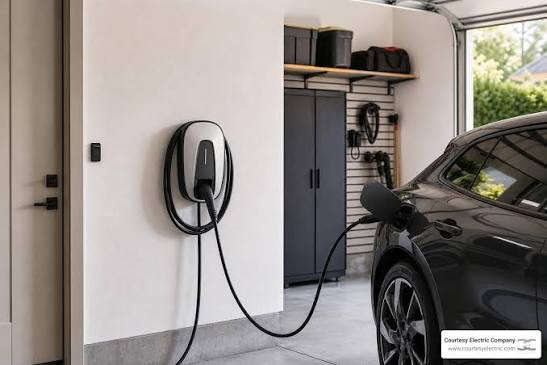
Installing an EV charger at home can make electric vehicle ownership easier, but the upfront cost may include much more than the charging unit. Electrical labor, wiring, conduit, permits, and electrical upgrades can all increase the total project cost. EV charger installation rebates and other incentives can help eligible homeowners, businesses, and property owners reduce some of these expenses.
The challenge is finding the programs that actually apply to your property. EV charging incentives can vary by state, utility territory, city, property type, income level, charger model, and installation date. This guide explains how to find EV charger rebates in your state, where to search for programs, how to verify eligibility, and what to do before purchasing or installing a charger.
Why EV Charger Rebates Vary by State
There is no single nationwide rebate program that applies equally to every EV charger installation.
States can create their own EV charging programs, while utilities may offer separate incentives to their customers. Cities, counties, municipalities, and other organizations may also provide funding for charging infrastructure.
This means two homeowners with identical EVs and identical chargers could have very different incentive opportunities simply because they live in different locations or receive electricity from different utilities.
Your state is therefore an important starting point, but it is not the only factor.
Your utility service area can be just as important. A homeowner may qualify for a utility rebate that is unavailable to another household in the same state.
Where to Find EV Charger Installation Rebates in Your State
Finding incentives usually requires checking several sources rather than relying on a single rebate list.
Start With Your State Energy Office
Most states have an agency responsible for energy policy, transportation, environmental programs, or related initiatives.
Search the agency’s website for terms such as “EV charging incentives,” “electric vehicle rebates,” “EV infrastructure,” or “alternative fuel vehicle programs.”
State programs may target residential charging, workplace charging, multifamily properties, public charging stations, fleets, or commercial facilities.
Read the eligibility requirements carefully because a program designed for businesses or public infrastructure may not apply to a private homeowner.
Check Your Electric Utility
Your utility should be one of the first organizations you investigate.
Utilities may offer EV charging rebates, managed charging programs, special electricity rates, or incentives for installing eligible smart chargers.
Some programs are designed to encourage customers to charge during periods when electricity demand is lower. In these cases, the incentive may require participation in a managed charging program or use of a network-connected charger.
Search your utility’s website for “EV,” “electric vehicle,” “EV charger,” “charging rebate,” or “home charging.”
Search Local Government Programs
State-level research can overlook local opportunities.
Cities and counties sometimes operate sustainability, clean transportation, or energy-efficiency programs that support EV charging.
Check your city or county website and search for EV charging, clean transportation, sustainability, or energy incentives.
For businesses, also check whether local economic development programs support charging infrastructure.
Use Official Incentive Databases
The U.S. Department of Energy’s Alternative Fuels Data Center provides information about alternative fuel vehicles and infrastructure, including incentives and laws. Its resources can be useful for identifying programs that may apply in a particular state.
However, an incentive database should be treated as a starting point rather than the final authority. Program rules can change, funding can become unavailable, and eligibility requirements may be updated.
Always confirm the current requirements with the organization administering the program.
Search for EV Charger Rebates Using Your ZIP Code
Your ZIP code can make the incentive search much more precise.
Some programs are restricted to specific geographic areas. Others may have income-based eligibility, disadvantaged-community requirements, or other location-specific conditions.
When searching, combine your state and ZIP code with terms such as:
“EV charger rebate”
“home EV charger incentive”
“Level 2 charger rebate”
“EV charging installation rebate”
“electric vehicle charging incentive”
Your electricity provider is also important. If you know the utility serving your property, include its name in your search.
Check Whether You Qualify Before Buying a Charger
Finding a rebate does not mean that you automatically qualify.
Programs may have requirements related to property ownership, utility customers, income, geographic location, equipment type, installation date, or contractor qualifications.
Some incentives are restricted to homeowners, while others may be available to renters with property-owner approval.
Businesses and multifamily property owners may have separate programs with different requirements.
Before purchasing equipment, create a simple eligibility checklist based on the program’s official rules.
Confirm Whether Your Charger Is Eligible
One of the easiest mistakes to make is assuming that every EV charger qualifies.
A program may require an approved charger model, specific safety certification, network connectivity, or a particular charging level.
Some utility programs are specifically designed around smart charging. The charger may need to communicate with the utility or an approved charging platform.
Check the exact manufacturer and model number rather than relying on a product category such as “Level 2 charger.”
If the program publishes an approved-equipment list, use that list before purchasing.
Determine Which Installation Costs Qualify
The charger is only part of an EV charging installation.
Depending on the property, you may also need a dedicated circuit, wiring, conduit, circuit protection, mounting equipment, permits, or electrical service upgrades.
Some rebate programs cover equipment only. Others may include installation labor or specific electrical work.
Never assume that every cost associated with installing a charger is eligible.
An itemized quote from an electrician can make this much easier to determine. Ask the contractor to separate the charger, labor, wiring, permits, panel work, and other expenses.
You can then compare each item with the program’s eligible-cost requirements.
Look for Pre-Approval Requirements
This is one of the most important steps in the entire rebate process.
Some programs require you to submit an application before purchasing equipment or starting installation. Others allow installation first and reimbursement afterward.
If pre-approval is required, installing the charger first could make you ineligible.
Before scheduling the electrician, look for terms such as “pre-approval,” “reservation,” “application prior to installation,” or “must be approved before purchase.”
If the language is unclear, contact the program administrator.
Check Installation Deadlines
A rebate program may require you to complete the project within a specific period after receiving approval.
For example, an incentive could require installation within a specified number of days or months after approval.
There may also be a separate deadline for submitting receipts and other documentation.
Do not wait until the deadline approaches to collect paperwork. Keep the required records throughout the project.
Understand Utility EV Charging Programs
Utility programs can provide some of the most relevant incentives for home charging because utilities have a direct interest in managing electricity demand.
A program might offer a rebate for purchasing an eligible smart charger or provide an incentive for enrolling in managed charging.
In some cases, the financial benefit is connected to how and when the vehicle charges.
Before enrolling, understand what information the utility receives, whether charging can be managed automatically, and whether there are requirements regarding participation or electricity rates.
The objective is not simply to find the largest rebate. You should evaluate the full program terms and determine whether they fit your normal charging habits.
Do Federal EV Charger Incentives Apply?
Federal EV charging tax incentives have changed, so older articles and rebate lists can be misleading.
The federal Alternative Fuel Vehicle Refueling Property Credit under Section 30C was modified by legislation enacted in 2025. The IRS states that the credit does not apply to qualified property placed in service after June 30, 2026. For qualifying residential property placed in service by that date, the credit was generally 30% of cost, subject to a $1,000 limit per item and other requirements, including location in an eligible census tract.
The IRS also provides information about eligible census tracts for purposes of Section 30C.
Because federal tax provisions can change, homeowners should verify the current rules before including a federal tax benefit in an installation budget.
Compare Rebates With the Total Installation Cost
A large rebate does not necessarily mean a cheaper installation.
Consider two hypothetical chargers. Charger A costs less but does not qualify for a local incentive. Charger B costs more but qualifies for a rebate that significantly reduces the final project cost.
The relevant comparison is the net cost after eligible incentives, not simply the purchase price.
Installation complexity matters as well. A charger that requires expensive electrical work could ultimately cost more than another model that can be installed using existing infrastructure.
Ask for a complete project estimate before making your decision.
Can You Combine State and Utility Incentives?
Sometimes.
A homeowner may discover a state incentive, utility rebate, and potentially another local program. Whether these benefits can be combined depends on the terms of each program.
Some incentives explicitly allow stacking. Others may reduce the eligible cost when another rebate has already been received.
Tax incentives may have separate rules.
Never assume that several advertised incentives can simply be added together. Check the program rules and, when necessary, contact the administrators for clarification.
Keep Documentation for Your Rebate Application
A successful application usually depends on documentation.
Keep your charger purchase receipt, electrician’s invoice, proof of payment, installation date, charger model number, permit documents, inspection records, and program approval information.
If the program requires photographs, take them during the installation while the equipment and electrical work are clearly visible.
An itemized invoice is particularly useful because it shows exactly what you paid for.
Save digital copies of everything and note the application deadline.
Common Reasons EV Charger Rebate Applications Are Rejected
Applications can fail for reasons that are often preventable.
One common problem is installing equipment before receiving required approval. Another is purchasing a charger that is not on the program’s eligible-equipment list.
Incomplete invoices or missing proof of payment can also cause delays.
Other issues can include applying after the deadline, using an unqualified contractor where one is required, installing at an ineligible property, or failing to meet a program’s utility-customer requirements.
The solution is simple: treat the rebate requirements as part of the installation plan rather than paperwork to handle afterward.
What Renters Should Know
Renters may be eligible for certain EV charging incentives, but installation can involve additional approval.
If you rent a house, ask the landlord whether you can install a charger and whether you are responsible for the electrical work.
Apartment and condominium residents may need approval from property managers, landlords, homeowners associations, or building owners.
Multifamily properties may also have access to different charging incentives than individual residential properties.
If you cannot install a charger at home, public charging remains an important alternative. An EV charging directory can help identify stations by state, city, ZIP code, network, and other categories.
What Businesses Should Know
Businesses should search for commercial EV charging incentives separately from residential programs.
Commercial programs may support workplace charging, fleet charging, multifamily properties, public charging stations, or larger infrastructure projects.
Requirements can involve property ownership, charger networking, accessibility, installation standards, electrical capacity, reporting, or minimum numbers of charging ports.
Businesses should calculate the complete project cost and expected long-term utilization rather than focusing only on the rebate amount.
How to Find Rebates Without Getting Misled
The internet contains thousands of pages discussing EV incentives, but not all of them are current.
An article published several years ago may describe a program that has expired. A manufacturer may advertise an incentive without explaining all eligibility conditions. A third-party rebate list may also lag behind official program changes.
Use third-party resources to discover potential programs, but verify important details through the current website of the utility, state agency, local government, or other organization administering the incentive.
Pay particular attention to:
- Eligibility requirements
- Installation deadlines
- Approved equipment
- Pre-approval requirements
- Eligible expenses
- Required contractors
- Funding availability
- Application deadlines
A Step-by-Step Strategy for Finding State EV Charger Rebates
Start by identifying the state, ZIP code, electricity provider, and property type associated with the installation.
Next, search the state energy agency, utility, and local government websites for current EV charging incentives. Use the Department of Energy’s Alternative Fuels Data Center as another source for identifying applicable state and federal programs.
Once you find a potential program, read the complete eligibility requirements. Confirm the charger model, installation costs, property requirements, application timing, and documentation rules.
Then obtain an itemized quote from a qualified electrician. Compare the total installation cost with the available incentive and calculate the potential net cost.
Finally, complete any required pre-approval process before purchasing or installing the equipment.
Use Your State’s EV Charging Resources for More Than Rebates
Researching state incentives is also a good opportunity to understand your area’s wider EV charging infrastructure.
If you regularly travel outside your home charging area, explore public charging stations in nearby cities and along common routes. An EV charging directory can help you identify charging locations by state, city, ZIP code, network, connector type, and other useful criteria.
Home charging can handle much of an EV driver’s routine energy needs, while public charging provides additional flexibility for longer journeys.
Make Your State’s EV Incentives Work for You
Finding EV charger installation rebates starts with understanding your specific location. Your state, electricity provider, ZIP code, property type, charger model, and installation date can all influence which incentives are available.
The best approach is to research programs before buying equipment, verify eligibility through official sources, and confirm whether pre-approval is required. An itemized installation quote can then help you determine the actual project cost and potential savings.
Once your home charging setup is complete, you can use your local EV charging directory pages to discover public stations throughout your state and nearby cities, giving you a broader charging strategy for everyday driving and longer trips.
Frequently Asked Questions
How do I find EV charger installation rebates in my state?
Start with your state's energy or transportation agency, then check your electric utility and local government websites. You can also use the U.S. Department of Energy's Alternative Fuels Data Center to identify state incentives and applicable laws.
Does every state offer an EV charger installation rebate?
No. Incentive availability varies by state, utility, property type, and program funding. Some areas may have several programs, while others may have limited or no residential rebates.
Can my electric utility offer an EV charger rebate?
Yes. Some utilities offer rebates, managed charging programs, special EV electricity rates, or incentives for eligible smart chargers. Check the current programs offered by the utility serving your property.
Do I need to apply for an EV charger rebate before installation?
Some programs require pre-approval, while others allow you to apply after installation. Always check the current rules before buying the charger or beginning electrical work.
Can an EV charger rebate cover installation labor?
Some programs cover eligible installation labor, while others only provide incentives for the equipment. Check the program's eligible-cost rules before estimating your savings.
Can I combine a state EV charger rebate with a utility rebate?
Possibly. Some programs allow multiple incentives, while others restrict stacking or adjust the eligible expenses. Review the rules for each program before assuming that incentives can be combined.
Are federal EV charger tax credits still available?
The federal Section 30C Alternative Fuel Vehicle Refueling Property Credit was accelerated to terminate for qualified property placed in service after June 30, 2026. Earlier installations had to satisfy the applicable federal requirements, including geographic eligibility.
What documents do I need for an EV charger rebate?
Requirements vary, but programs may request receipts, itemized invoices, proof of payment, charger model information, installation dates, permits, inspection records, photographs, and proof of eligibility.
No reviews yet — be the first to share your experience.