
EV Charging Power Explained: kW, kWh, Voltage and Amperage
By Staff Writer · October 8, 2026
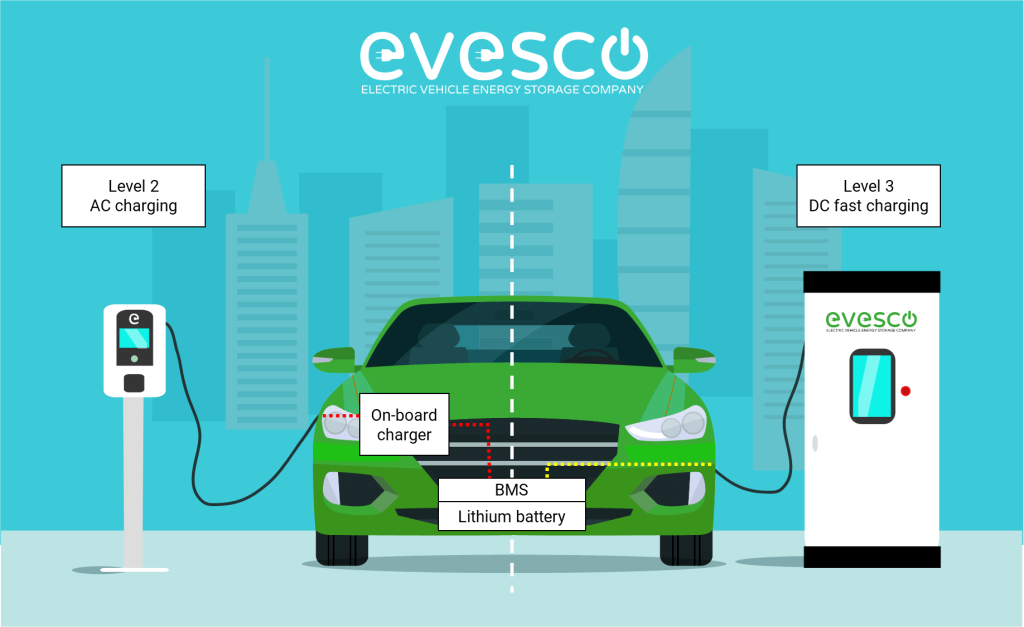
Understanding EV charging power becomes much easier once you know what kilowatts (kW), kilowatt-hours (kWh), volts (V), and amps (A) actually measure. These terms appear on home chargers, public charging stations, vehicle specifications, and electricity bills, but they describe different parts of the charging process.
The basic relationship is simple: voltage multiplied by amperage produces electrical power, measured in watts. For EV charging, that power is usually expressed in kilowatts. Energy stored in the vehicle’s battery is measured in kilowatt-hours. Knowing the difference helps drivers compare chargers, estimate charging times, understand why two chargers with different power ratings charge at different speeds, and choose charging equipment that fits their vehicle.
What Is EV Charging Power?
EV charging power is the rate at which electrical energy is delivered to an electric vehicle. It is measured in watts, with larger charging systems generally described in kilowatts (kW).
A charger rated at 7.2 kW, for example, can theoretically deliver 7.2 kilowatt-hours of energy during one hour of operation. A 150 kW DC fast charger can deliver energy at a much higher rate, although the vehicle may not always accept the full 150 kW.
The U.S. Department of Energy explains the relationship between power, voltage, and current as:
Power (watts) = Voltage (volts) × Current (amps)
For example, a charging system operating at 240 volts and 30 amps has a theoretical power level of 7,200 watts, or 7.2 kW.
However, this calculation does not mean the vehicle will continuously receive exactly 7.2 kW. Actual charging power can be limited by the vehicle, charger, electrical installation, battery temperature, and charging conditions.
What Does kW Mean for EV Charging?
Kilowatt (kW) measures power, or how quickly electricity is being delivered.
This makes kW one of the most important numbers when comparing EV chargers. In general, a higher kW rating means a charger has the potential to charge an EV faster.
Typical charging categories illustrate the difference:
- Level 1: approximately 1–2 kW
- Level 2: commonly several kW, with equipment capable of up to about 19.2 kW
- DC fast charging: commonly tens or hundreds of kW, with current equipment available up to 500 kW in some installations
The DOE’s Alternative Fuels Data Center lists Level 1 at about 2–5 miles of range per hour, Level 2 at about 10–30 miles per hour, and DC fast charging at approximately 100–200+ miles of range in 30 minutes. Actual results vary by vehicle and charging conditions.
The important point is that charger kW is a maximum power capability, not a guarantee of the power the EV will receive.
What Does kWh Mean for an EV?
Kilowatt-hour (kWh) measures energy, rather than power.
An EV battery might have a usable capacity measured in dozens of kWh. A larger battery can generally store more energy than a smaller one, although vehicle efficiency also determines how far that energy takes the vehicle.
The distinction can be understood with a simple example:
- kW = how fast electricity flows
- kWh = how much electrical energy is stored or used
A 10 kW charger operating for two hours could theoretically deliver 20 kWh of energy:
10 kW × 2 hours = 20 kWh
Real charging is not perfectly efficient, so the electricity drawn from the grid can be greater than the energy ultimately stored in the battery.
The DOE similarly explains that energy delivered can be calculated as charger power multiplied by charging time, while noting that charging losses and charging curves affect the actual amount stored.
What Is Voltage in EV Charging?
Voltage, measured in volts (V), represents the electrical potential that drives current through a charging system.
For EV charging, higher voltage can allow more power to be delivered when the system can also support sufficient current. This is why voltage and amperage must be considered together rather than treating either measurement as a direct measure of charging speed.
Level 1 charging in North America typically uses a 120-volt household supply. Level 2 charging generally uses 208 or 240 volts, depending on the electrical service.
DC fast-charging systems operate at substantially higher electrical power and can use much higher voltage and current than typical residential AC charging.
Voltage is therefore an important part of EV charging infrastructure, but it does not tell you the complete charging story by itself.
What Is Amperage?
Amperage, or current, measures the amount of electrical current flowing through a circuit. It is expressed in amperes, commonly shortened to amps (A).
Because:
kW = volts × amps ÷ 1,000
increasing either voltage or amperage can increase available charging power, assuming the equipment and vehicle are designed to handle it.
For example, a 240-volt circuit delivering 30 amps provides:
240 × 30 ÷ 1,000 = 7.2 kW
A 240-volt circuit operating at 40 amps would theoretically provide 9.6 kW.
Higher amperage, however, places greater demands on wiring, breakers, connectors, and other electrical equipment. EV charging installations therefore need appropriately sized circuits and protection.
How kW, kWh, Voltage and Amps Work Together
These four measurements describe different parts of the same electrical process.
Voltage and amperage determine the available electrical power. Power is measured in kW. Over time, that power transfers energy, which is measured in kWh.
Consider a 7.2 kW Level 2 charger. If it could operate continuously at its full rated output for one hour, it could theoretically deliver 7.2 kWh of energy. Two hours would correspond to 14.4 kWh.
In practice, the vehicle may draw less than the charger’s maximum rating, especially as the battery approaches a higher state of charge. Charging losses also mean that electricity consumed from the grid and energy stored in the battery are not identical.
This is why simply dividing battery capacity by charger rating provides only an estimate of charging time.
How Charging Power Affects EV Charging Speed
Charging power has a direct relationship with charging speed, but it is not the only factor.
For example, the DOE identifies Level 1 charging at roughly 2–5 miles of range per hour and Level 2 at approximately 10–30 miles per hour. DC fast charging can add approximately 100–200+ miles of range in 30 minutes under suitable conditions.
The actual charging rate depends on factors including:
- The vehicle’s maximum AC or DC charging capability
- Battery capacity and state of charge
- Battery temperature
- Charger power output
- Electrical service
- Charging equipment and connector compatibility
- The vehicle’s charging curve
Consequently, connecting an EV capable of accepting 100 kW to a 350 kW charger does not make the vehicle charge at 350 kW.
Why a 350 kW Charger Does Not Always Deliver 350 kW
A charger’s advertised power rating describes what the equipment can potentially provide. The vehicle determines how much power it can accept at a given moment.
For example, a vehicle may have a maximum DC charging rate below the rating of the charging station. In that situation, the vehicle becomes the limiting factor.
Battery conditions can also reduce charging power. Charging systems typically adjust power throughout a session rather than maintaining the maximum rate from beginning to end. The DOE notes that charging time depends on state of charge, battery capacity and type, the vehicle’s internal charger capacity, charging equipment, and power output.
This is why a higher-rated public charger can still be useful even when an EV cannot use its full output, but it does not automatically guarantee a shorter charging stop.
EV Charging Power at Level 1
Level 1 charging uses a standard 120-volt AC connection in North America. It is generally the slowest form of EV charging but can be practical for drivers who have modest daily driving needs or plenty of time to charge.
The DOE estimates that Level 1 can add approximately 2–5 miles of range per hour. A vehicle parked overnight for eight hours could therefore gain a useful amount of additional range, depending on the vehicle and conditions.
Level 1 can be particularly useful where installing higher-powered charging equipment is unnecessary or impractical.
EV Charging Power at Level 2
Level 2 charging uses higher-voltage AC electrical service, typically 208 or 240 volts. It is widely used for residential, workplace, commercial, and public charging.
The DOE states that Level 2 equipment can range from about 2.9 to 19.2 kW, with actual power depending on the equipment and electrical service. Many residential systems operate around 7.2 kW.
For many EV owners, Level 2 provides a practical balance between charging speed, installation requirements, and daily usability.
EV Charging Power With DC Fast Charging
DC fast charging provides substantially more power than typical AC home charging. Instead of relying on the vehicle’s onboard AC charger to convert incoming electricity, DC charging equipment supplies direct current to the vehicle’s battery system.
The DOE says modern DC fast-charging equipment can provide power outputs up to 500 kW, while actual charging power varies according to the vehicle and battery state of charge.
DC fast charging is especially useful for road trips, highway travel, fleet operations, and situations where drivers need significant range in a relatively short period.
When searching a charging directory, drivers should check both the connector type and available power because not every EV can use every charger at its maximum rating.
Does Higher EV Charging Power Always Mean Better?
Not necessarily.
A 350 kW or 500 kW charger can be valuable for compatible vehicles, but a driver who charges overnight at home may have little practical need for that level of power. For daily charging, a properly installed Level 2 charger may provide enough energy during the time the vehicle is parked.
Higher-powered charging can also require more substantial electrical infrastructure. For businesses and charging-site operators, higher power may involve additional electrical capacity, equipment, and infrastructure considerations.
The best charging power is therefore the one that matches the vehicle, parking time, driving requirements, and available electrical infrastructure.
How to Choose the Right EV Charger Power
Start with the vehicle manufacturer’s specifications. Check the maximum AC charging power for home and workplace charging and the maximum DC charging power for public fast charging.
Next, consider how much driving you normally do and how long the vehicle remains parked. If the EV is parked overnight, Level 2 can generally provide substantially more charging power than Level 1. For long-distance travel, DC fast charging can reduce charging stops considerably.
Finally, consider the electrical service available at the property. A charger should not simply be selected based on its highest advertised kW rating. The electrical circuit, equipment, vehicle, and installation must all be compatible.
For drivers comparing public options, charging-directory pages can help identify stations by location, charging level, connector, and other available information. Always verify current station details before making a trip.
Understanding EV Charging Power Makes Charging Easier
kW, kWh, voltage, and amperage may look like technical terminology, but each has a straightforward role. Kilowatts describe charging power, kilowatt-hours describe energy, volts describe electrical potential, and amps describe current.
Understanding these measurements makes it easier to compare Level 1, Level 2, and DC fast charging, estimate charging performance, and choose equipment that fits an EV’s capabilities. Most importantly, remember that the charger’s maximum power is only one part of the equation. The vehicle, battery, electrical system, and charging conditions all determine how much power is actually delivered.
Frequently Asked Questions
What does kW mean on an EV charger?
kW, or kilowatts, measures the rate at which electrical power can be delivered by the charger. A higher kW rating generally means greater potential charging speed, provided the vehicle can accept that power.
What does kWh mean for an electric vehicle?
kWh, or kilowatt-hours, measures energy. EV battery capacity is expressed in kWh, while electricity consumption and the energy delivered during charging can also be measured in kWh.
How do you calculate EV charging power?
For a basic single-phase AC system, multiply voltage by amperage and divide by 1,000: kW = volts × amps ÷ 1,000. Actual delivered power can be affected by equipment and vehicle limitations.
Is a 7.2 kW EV charger fast?
A 7.2 kW charger is a typical useful Level 2 charging power for home charging. It is considerably faster than Level 1 but much slower than modern DC fast chargers.
Does a 240V charger always charge faster than a 120V charger?
Not automatically, but 240V Level 2 charging can support substantially more power than typical 120V Level 1 charging when paired with appropriate amperage and equipment.
Why doesn't my EV always charge at the charger's advertised kW?
The vehicle may have a lower maximum charging rate, or its battery management system may reduce power because of battery temperature, state of charge, or other operating conditions.
What is the difference between charging power and battery capacity?
Charging power, measured in kW, describes how quickly energy is delivered. Battery capacity, measured in kWh, describes how much energy the battery can store.
What EV charging power is best for home charging?
For many drivers, Level 2 provides a practical home-charging solution because it can deliver substantially more power than Level 1 and can generally recharge an EV overnight. The appropriate power level depends on the vehicle, driving needs, electrical service, and installation.
No reviews yet — be the first to share your experience.