
Home EV Charging Installation: The Complete Beginner’s Guide
By Staff Writer · September 14, 2026
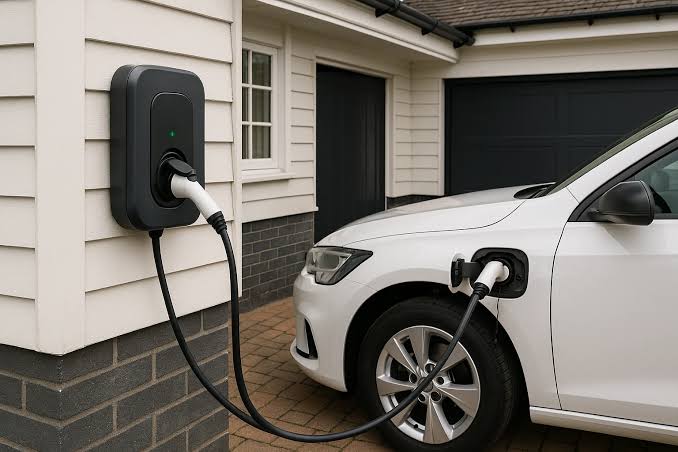
Home EV charging installation is one of the most practical upgrades an electric vehicle owner can make. A dedicated charger at home can make daily charging more convenient and reduce the need to rely on public charging stations for routine driving. However, installing an EV charger involves more than simply mounting a unit on a wall and plugging it in.
The right installation depends on your vehicle, charging needs, electrical service, parking arrangement, charger type, and the condition and capacity of your home’s electrical system. This guide explains the fundamentals of home EV charging installation, including charger levels, electrical requirements, installation costs, safety considerations, installation steps, and how to choose the right setup for your property.
What Is Home EV Charging Installation?
Home EV charging installation is the process of installing the equipment and electrical infrastructure needed to charge an electric vehicle at a residential property.
A basic setup usually includes an EV charging unit, an electrical connection to the home’s service panel, appropriate circuit protection, and a connection to the vehicle. Depending on the property, installation may also require conduit, wiring, a new circuit breaker, panel modifications, or other electrical work.
Some EVs can be charged from a conventional household outlet using portable charging equipment. This can be suitable for drivers with modest daily mileage, but it is generally slower than a dedicated home charging installation.
For many EV owners, a Level 2 charging setup is the more practical long-term solution. Level 2 equipment uses a higher-voltage residential circuit and can provide substantially faster charging than a standard household outlet, although the actual charging speed depends on the charger, vehicle, electrical circuit, and other factors.
Why Install an EV Charger at Home?
Home charging changes the way an EV owner approaches charging. Instead of planning every charging session around a public station, drivers can typically plug in after returning home and start the next day with additional energy in the battery.
The biggest advantage is convenience. A home charger can make charging part of an ordinary daily routine rather than a separate trip.
Home charging can also be useful for drivers who have predictable parking arrangements. If a vehicle remains parked at home for several hours overnight, there is a long charging window available even when the charging rate is relatively modest.
Another advantage is greater control over charging. Depending on the vehicle and charger, drivers may be able to schedule charging for particular times, monitor energy consumption, or coordinate charging with electricity-rate periods.
Public charging remains important, particularly for long-distance travel, apartment residents without dedicated parking, and drivers who regularly exceed the range available from overnight charging. A home charger does not necessarily replace public charging; it complements it.
Level 1 vs. Level 2 Home EV Charging
One of the first decisions in home EV charging installation is choosing between Level 1 and Level 2 charging.
Level 1 Charging
Level 1 charging generally uses a standard household electrical outlet and portable charging equipment supplied with or compatible with the vehicle.
Its major advantage is simplicity. In some cases, no dedicated EV charging circuit is required because the equipment can use an existing suitable outlet. However, electrical requirements and outlet suitability should always be evaluated rather than assumed.
The limitation is charging speed. Level 1 can work well for drivers with short daily commutes or vehicles that remain parked for long periods, but it may not provide enough energy for drivers with higher daily mileage.
Level 2 Charging
Level 2 charging uses a higher-voltage circuit and is commonly installed as a dedicated home EV charging solution.
A Level 2 charger can add significantly more energy during an overnight parking period than Level 1 charging. This makes it particularly attractive for households that drive frequently, own an EV with a larger battery, or want faster recovery between trips.
Level 2 installation typically requires professional electrical work. The electrician must determine whether the existing electrical service and panel can support the intended circuit and whether the proposed installation complies with applicable electrical requirements.
For many homeowners, Level 2 provides the best balance between charging speed and practicality.
What Electrical Requirements Does a Home EV Charger Need?
Electrical requirements vary by charger and property. There is no universal circuit size or installation configuration that applies to every EV.
The electrician will generally need to consider the home’s electrical service capacity, available panel space, charger requirements, wire and conduit requirements, circuit protection, installation location, and other electrical loads already connected to the property.
The distance between the electrical panel and charger can also matter. A charger installed close to the panel may require a relatively straightforward wiring route, while a charger located on the opposite side of a garage or in a detached structure may require significantly more electrical work.
Older homes can present additional considerations. An electrical panel may have limited capacity, insufficient spaces for new breakers, outdated equipment, or other conditions that need to be addressed before installing an EV charger.
The important point is that homeowners should not select a charger solely based on its advertised charging speed. The home’s electrical infrastructure must also be able to support the installation.
Do You Need a Dedicated Circuit for a Home EV Charger?
Many dedicated Level 2 EV charging installations use a dedicated circuit because EV charging can represent a substantial continuous electrical load.
A dedicated circuit helps ensure that the charging equipment has the appropriate electrical supply without competing with unrelated household appliances on the same circuit.
The exact circuit requirements depend on the charging equipment and applicable electrical standards. An appropriately qualified electrician should determine the circuit configuration rather than relying on a generic recommendation found online.
This is particularly important when a homeowner is considering a higher-powered charger. Increasing charging power may require more substantial electrical infrastructure, and the additional charging speed may not always justify the extra installation complexity.
Can Your Electrical Panel Handle an EV Charger?
Before installing a home EV charger, the electrical panel should be evaluated.
Panel capacity is not determined simply by whether there is an empty breaker position. An available physical space does not automatically mean that the home’s electrical service has enough capacity for another significant load.
A qualified electrician can evaluate the existing electrical service and household loads to determine whether the proposed charger can be accommodated.
If the panel or service cannot support the desired installation, several possibilities may exist. Depending on the property and local requirements, the solution could involve selecting a lower-power charging configuration, managing electrical loads, upgrading electrical equipment, or making other modifications.
A service upgrade can substantially increase project complexity and cost, so determining electrical capacity early is important.
Where Should You Install a Home EV Charger?
The ideal charging location depends on where the vehicle is normally parked and how the electrical system is configured.
For a typical single-family home, the garage is often a convenient location because it can provide protection from weather and keep the charger close to the vehicle. However, an outdoor installation can also be appropriate when the vehicle is parked in a driveway or other exposed location.
The charger should be positioned so that the cable can reach the vehicle without creating unnecessary trip hazards or requiring excessive cable tension.
Consider how the vehicle is normally parked, where the charging port is located, how the cable will be routed, and whether the charger needs to be accessible to more than one vehicle.
For outdoor installations, the selected equipment must be appropriate for the environment and installed according to its specifications and applicable requirements.
How Much Does Home EV Charging Installation Cost?
The cost of home EV charging installation varies significantly from one property to another.
The charger itself is only one component of the total project. Installation costs can be influenced by the electrical panel, wiring distance, conduit requirements, circuit configuration, labor, permits, mounting location, and whether electrical upgrades are necessary.
A straightforward installation with a suitable electrical panel and a nearby charging location can be considerably simpler than an installation requiring long cable runs, difficult access, panel modifications, or an electrical service upgrade.
Homeowners should therefore be cautious about relying on a single advertised installation price. A quote that appears inexpensive may not include every required component or potential electrical work.
A professional site assessment provides a more useful basis for comparing installation quotes.
What Is Included in a Home EV Charger Installation?
A typical professional installation may include several components, depending on the equipment and property.
The charger must be mounted securely and connected to the appropriate electrical circuit. Wiring must be correctly sized and routed, and the installation must incorporate the necessary electrical protection.
The electrician may also install conduit to protect wiring and create a clean, durable installation. Depending on the property, additional work may be required at the electrical panel.
Permitting and inspection requirements vary by jurisdiction. Homeowners should verify local requirements before work begins, particularly when electrical modifications are involved.
The final installation should also be tested to confirm that the equipment operates correctly and safely.
How Does Home EV Charging Installation Work?
Although every property is different, the process generally begins with selecting a suitable charger and determining where it will be installed.
The next step is an electrical assessment. The installer evaluates the electrical panel, service capacity, proposed circuit, installation route, and charger requirements.
Once the installation design is established, the required electrical work can be completed. This may include installing a new circuit, running wiring, mounting the charging equipment, connecting the charger, and completing required electrical protection.
If permits or inspections apply, those steps must also be completed according to local requirements.
After installation, the charger should be tested. The homeowner can then configure the equipment and vehicle according to the manufacturer’s instructions.
Should You Hire an Electrician to Install an EV Charger?
For a dedicated Level 2 home charging installation, professional electrical installation is generally the safest and most appropriate approach.
EV charging is a substantial electrical load, and incorrect wiring, circuit protection, grounding, or installation practices can create serious safety problems.
A qualified electrician can evaluate the property rather than assuming that a standard installation will work. This becomes particularly important in older homes, detached garages, outdoor installations, and properties with limited electrical capacity.
Homeowners should also verify that the electrician is familiar with EV charging equipment and local electrical requirements.
The cheapest installation is not necessarily the best installation. The goal should be a properly designed, code-compliant system that can operate reliably over the long term.
Hardwired vs. Plug-In EV Chargers
Home EV chargers can be installed as hardwired equipment or, depending on the model, connected through a suitable receptacle.
Hardwired Chargers
A hardwired charger is permanently connected to the electrical wiring.
This configuration can provide a clean installation and eliminate dependence on a separate plug and receptacle. It can also be well suited to outdoor installations where a permanently installed charging unit is preferred.
Plug-In Chargers
Some charging equipment is designed to connect to a suitable high-power receptacle.
A plug-in configuration can provide flexibility because the charging equipment can potentially be disconnected without removing the entire electrical circuit. However, the receptacle must be appropriate for the charging load and installed correctly.
Neither configuration is automatically better for every homeowner. The decision should be based on the charger, electrical system, installation location, and long-term needs.
How Fast Will a Home EV Charger Charge Your Car?
Charging speed depends on more than the charger’s advertised power.
The vehicle’s onboard charging capability can limit how much power it accepts from an AC Level 2 charger. The charger itself also has a maximum output, while the home’s electrical circuit determines how much power can safely be supplied.
Battery size and the vehicle’s current state of charge also influence how long charging takes. Charging is not necessarily performed at the maximum rate throughout the entire session.
For this reason, homeowners should focus on how much driving energy they need each day rather than simply choosing the highest-rated charger available.
A charger that comfortably replaces a typical day’s driving during the vehicle’s normal parking period may be more practical than an unnecessarily powerful installation.
What Connector Does a Home EV Charger Use?
Connector compatibility is another important consideration.
The charging connector required at home depends on the vehicle and charging equipment. In North America, AC charging has historically involved connectors such as J1772, while many newer vehicles and charging products use the North American Charging Standard (NACS).
Compatibility is changing as automakers increasingly adopt NACS. Vehicle-specific requirements should therefore be checked before purchasing charging equipment.
An adapter may provide compatibility in some situations, but homeowners should confirm that any adapter is appropriate for the intended charging application and equipment.
The safest approach is to verify the vehicle’s charging specifications and the charger’s connector configuration before installation.
Smart EV Chargers for Home Charging
Smart EV chargers can add connected features beyond basic charging.
Depending on the product, smart charging equipment may allow homeowners to monitor charging sessions, schedule charging, manage settings through an application, or integrate charging with other energy-management systems.
These features can be useful, but they should not be the only factor in selecting a charger.
Reliability, compatibility, electrical requirements, installation method, warranty, software support, and overall suitability for the home should all be considered.
A homeowner who does not need advanced connected features may prefer a simpler charger. Another household may find scheduled or monitored charging valuable enough to justify a smart model.
Should You Charge Your EV Every Night?
Not necessarily.
EV drivers do not always need to charge to a full battery every night. Charging habits should reflect the vehicle manufacturer’s recommendations, daily driving requirements, and the driver’s preferred battery-management strategy.
For many households, plugging in regularly and allowing the vehicle to replenish the energy used during daily driving is more convenient than waiting until the battery is nearly empty.
Modern EVs also provide charging controls that can help drivers select a target state of charge or schedule charging.
The important advantage of home charging is that the vehicle can recover energy while it is already parked, rather than requiring a separate trip to a public charging station.
Home Charging and Electricity Rates
Electricity pricing can influence when an EV owner chooses to charge.
Some utilities offer time-based pricing structures in which electricity costs differ depending on the time of day. Where such rates are available, scheduled charging may allow drivers to shift charging to a lower-cost period.
However, electricity plans differ considerably by utility and location. Homeowners should check their specific electricity tariff rather than assuming that overnight charging is always the cheapest option.
Smart chargers and vehicle charging schedules can make it easier to automate charging around a preferred schedule when the equipment supports those functions.
Home EV Charging for Apartments and Condos
Home EV charging can be more complicated for residents of apartments, condominiums, and other multi-unit properties.
The challenge may not be the charger itself but determining who controls the parking space, electrical infrastructure, and installation permissions.
Residents may need approval from property management, a homeowners association, landlord, or other responsible party. Shared electrical infrastructure can also require a different approach from a single-family home’s dedicated service.
In these situations, it is useful to establish the ownership and electrical requirements before purchasing equipment.
For residents without practical access to home charging, public charging directories can help identify nearby charging options. Searching by city, ZIP code, or charging network can make it easier to identify stations that fit a regular driving routine.
Home Charging vs. Public Charging
Home and public charging serve different purposes.
Home charging is primarily about convenience and routine energy replenishment. Public charging provides access to higher-power charging and enables EV drivers to travel beyond the practical range of a single home charging session.
For a homeowner with reliable overnight parking, home charging can handle a significant portion of everyday charging needs. Public stations can then serve as a supplement for road trips, unusually long driving days, or situations where home charging is unavailable.
Drivers who cannot install a home charger may rely much more heavily on workplace, retail, destination, or public fast-charging locations.
A comprehensive charging strategy can therefore include both home and public charging rather than treating them as competing solutions.
Common Home EV Charging Installation Mistakes
Many installation problems can be avoided by planning before purchasing equipment.
One common mistake is choosing a charger based solely on maximum charging power. The vehicle may not be able to use the charger’s full output, or the home’s electrical system may require expensive upgrades to support it.
Another mistake is underestimating installation complexity. The distance between the panel and charger, wall construction, detached structures, outdoor routing, and electrical service can all affect the project.
Homeowners should also avoid assuming that any existing outlet is automatically suitable for continuous EV charging. The outlet, circuit, wiring, and protective devices must be appropriate for the intended use.
Finally, selecting equipment without checking vehicle compatibility can result in unnecessary adapters or an unsuitable charging configuration.
How to Choose the Right Home EV Charger
Start with the vehicle, not the charger.
Determine the vehicle’s AC charging capability, connector requirements, typical daily mileage, and charging needs. Then consider where the vehicle is parked and how long it normally remains there.
Next, evaluate the home’s electrical infrastructure. The electrician should determine whether the planned charger can be installed on an appropriate circuit without exceeding the property’s electrical capacity.
Consider features such as hardwired or plug-in installation, smart charging, cable length, weather suitability, connectivity, warranty, and manufacturer support.
Finally, compare the complete installation cost rather than comparing charger purchase prices alone.
A lower-cost charger that requires substantial electrical upgrades may ultimately be more expensive than a moderately powered charger that fits the existing electrical infrastructure.
How to Prepare for a Home EV Charging Installation
Before an electrician arrives, homeowners can gather the information needed to make the assessment more efficient.
Have the EV’s make, model, and charging specifications available. Identify where the vehicle is normally parked and where you would prefer the charger to be located.
It is also useful to know where the electrical panel is located and whether the proposed charger would be indoors, outdoors, in a garage, or in a detached structure.
If you have already selected a charger, provide the installer with its installation documentation and electrical specifications.
These details allow the electrician to determine whether the proposed equipment and installation location are practical before work begins.
How to Maintain a Home EV Charger
Once installed, an EV charger generally requires less routine maintenance than many mechanical household systems, but it should still be monitored.
Keep the charging cable and connector clean and inspect them periodically for visible damage. The charger should remain securely mounted, and any unusual heat, odors, damage, error messages, or repeated charging interruptions should be investigated.
Outdoor equipment should be kept clear of conditions that could interfere with safe operation.
Always follow the manufacturer’s maintenance and operating instructions. Electrical repairs or modifications should be performed by an appropriately qualified professional.
Finding Public EV Chargers When Home Charging Is Not Enough
Even homeowners with dedicated EV charging will occasionally need public charging.
Public charging stations can be useful during road trips, long workdays, vacations, or periods when the home charger is unavailable.
An EV charging directory can help drivers search for stations by location and, where available, identify relevant networks, connector types, charging categories, and other station information.
For example, a driver planning a trip can research charging options in the destination city before leaving home. Similarly, drivers who live in an apartment or cannot install a charger can search for charging stations by city or ZIP code to identify practical alternatives.
The most useful station information should always be verified before relying on a location for a time-sensitive trip because charger availability, pricing, operating conditions, and equipment status can change.
Is Home EV Charging Installation Worth It?
For many EV owners, home EV charging installation is one of the most useful investments associated with owning an electric vehicle.
Its value comes primarily from convenience. Instead of making a separate charging stop for routine energy needs, drivers can use the time when the vehicle is already parked at home.
The right installation does not necessarily require the most powerful charger. A properly sized system that matches the vehicle, electrical infrastructure, parking situation, and daily driving pattern can provide an excellent balance of convenience and cost.
The key is to evaluate the complete system before installation rather than treating the charger as an isolated appliance.
Conclusion
Home EV charging installation can make electric vehicle ownership significantly more convenient by allowing drivers to replenish their vehicles while they are parked at home. The best setup depends on the vehicle’s charging capability, daily driving needs, available parking, electrical service, installation location, and desired charging speed.
For many homeowners, a properly installed Level 2 charger provides a practical balance between charging performance and everyday usability. However, choosing the highest-powered equipment is not always the best approach. A professional electrical assessment can help determine what the property can safely support and prevent unnecessary upgrades or installation complications.
No reviews yet — be the first to share your experience.