
EV Charger Installation With an Electrical Panel Upgrade: Costs and Options
By Staff Writer · October 24, 2026
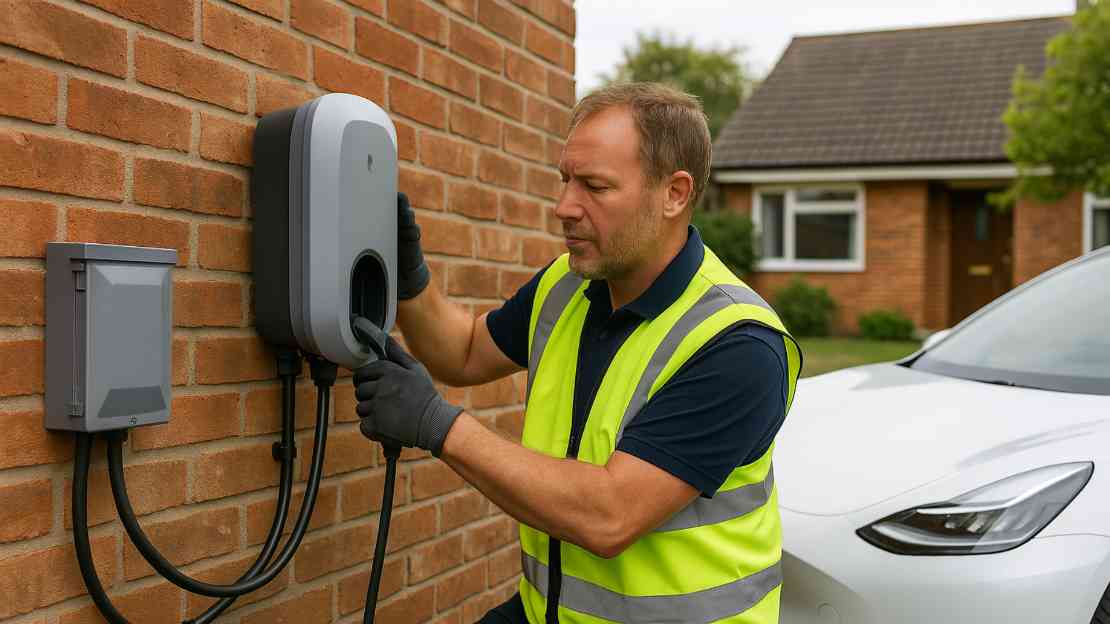
Installing a home EV charger may require an electrical panel upgrade if your existing electrical system cannot safely support the additional load. The cost depends on your panel’s capacity, your home’s electrical demand, the charger you choose, and whether the installation requires new wiring or other electrical work. For homeowners planning Level 2 charging, understanding these requirements before installation can help prevent unexpected expenses and delays.
This guide explains when an electrical panel upgrade is necessary for EV charger installation, how much it may cost, which alternatives can reduce expenses, and what homeowners should consider when choosing an installation approach. It also covers permits, electrical load calculations, and ways to determine whether your existing panel can support home charging
How Much Does EV Charger Installation With a Panel Upgrade Cost?
The cost of EV charger installation with an electrical panel upgrade varies considerably depending on the home’s electrical infrastructure and the scope of work. Homeowners may pay for the charger, installation labor, electrical wiring, permits, and panel replacement or capacity upgrades.
For budgeting purposes, a straightforward home Level 2 charger installation may cost several hundred to a few thousand dollars, while a project requiring a substantial electrical panel upgrade can cost several thousand dollars more. Complex installations involving service-line work, long cable runs, trenching, or utility coordination can cost significantly more.
The following estimates provide general U.S. budgeting ranges rather than guaranteed prices:
| Installation component | Illustrative cost range |
| Level 2 EV charger hardware | $300–$1,000 |
| Standard installation labor and materials | $500–$1,500 |
| Electrical panel upgrade | $1,500–$4,000+ |
| Permits and inspections | $50–$500 |
| Additional wiring or electrical work | $200–$1,500+ |
These figures are broad planning estimates. Actual prices depend on local labor rates, equipment, permit fees, panel location, and the complexity of the electrical work. The ranges are not necessarily additive because some installation quotes already include wiring, permits, or other components.
A basic installation without a panel upgrade may cost substantially less than a project involving a new service entrance or utility-side electrical work. Ask electricians to separate equipment, installation, panel work, permits, and any utility charges in their estimates.
When Does an EV Charger Require an Electrical Panel Upgrade?
Not every home needs a new electrical panel to support an EV charger. The decision depends on the existing service capacity, current household demand, and the charger’s electrical requirements.
A licensed electrician should evaluate the system before recommending an upgrade.
Your Existing Panel Has Limited Capacity
An electrical panel distributes power to household circuits. Its capacity must accommodate the electrical loads connected to it, including appliances, heating and cooling equipment, water heaters, and EV chargers.
Many older homes have 100-amp electrical services, while newer homes may have 150-amp or 200-amp services. These ratings alone do not determine whether a charger can be added.
For example, a 200-amp panel may have sufficient capacity for a Level 2 charger, but a home with electric heating, an electric range, a large water heater, and other substantial loads may still require additional planning.
Conversely, a home with a smaller service may be able to accommodate EV charging through an approved load-management solution rather than a full panel upgrade.
You Want Faster Level 2 Charging
Level 2 chargers use 240-volt power and typically charge much faster than standard household outlets.
Common residential charging configurations include 32-amp and 40-amp charging, while some equipment supports higher current. A charger delivering 40 amps continuously generally requires a 50-amp branch circuit under standard continuous-load sizing practices.
Higher-powered chargers can place greater demands on the electrical system. Before choosing a charging unit, confirm that the vehicle can accept the intended charging rate and that the home’s wiring, breaker, and service can safely support it.
A panel upgrade may be appropriate when the desired charging capacity exceeds what the existing system can accommodate.
Your Home Already Has High Electrical Demand
A home’s electrical demand may increase substantially when several major appliances operate simultaneously. This is particularly relevant in properties with electric furnaces, heat pumps, electric water heaters, electric ranges, swimming pool equipment, or other large loads.
An electrician can perform an electrical load calculation to determine whether the service can support the proposed charger.
The assessment should consider existing loads, applicable electrical codes, and the charger’s continuous operating requirements. Simply counting unused breaker spaces is not enough to establish that a panel has sufficient capacity.
Your Electrical Panel Is Outdated or Unsafe
Sometimes, the main issue is not capacity but the condition of the electrical equipment.
An electrician may recommend replacing a panel if it has damaged components, overheating, corrosion, obsolete equipment, or other safety concerns. Certain panels may also require special evaluation because of known equipment issues or difficulties obtaining compatible replacement parts.
If the panel is unsafe, installing an EV charger without addressing the underlying problem may not be appropriate.
What Are the Main Electrical Panel Upgrade Options?
The most suitable solution depends on the home’s existing electrical service, charging needs, budget, and future plans.
Upgrade to a 200-Amp Electrical Panel
Upgrading to a 200-amp service is a common option for homeowners who need more electrical capacity.
This approach may make sense when the existing service is too limited for an EV charger alongside other household loads. It can also provide additional capacity for future equipment, such as heat pumps or electric appliances.
However, a 200-amp upgrade is not automatically necessary for every EV charger installation. The electrician must determine whether the proposed service size is appropriate for the home’s calculated demand.
The project may involve replacing the main panel, upgrading the service entrance conductors, modifying the meter equipment, coordinating with the utility, and obtaining permits.
Install a Load-Managed EV Charger
A load-managed charging system adjusts charging power based on the home’s available electrical capacity or the demand from selected household circuits.
Depending on the equipment and approved design, the charger may reduce charging current when household demand rises and increase it when other loads decrease.
This can help homeowners avoid an expensive service upgrade while maintaining convenient overnight charging. It is particularly useful when the electrical service is otherwise in good condition but has limited spare capacity.
The system must be designed and installed in accordance with applicable electrical codes and manufacturer requirements. Not every charger supports every load-management configuration.
Install a Lower-Powered Level 2 Charger
A lower-powered Level 2 charger may meet the driver’s daily needs without requiring the electrical capacity associated with a higher-powered unit.
For example, a charger configured for a lower current can provide meaningful overnight charging for drivers with predictable daily mileage.
The right charging speed depends on how far the vehicle travels, how long it remains parked, and the vehicle’s onboard AC charging limit.
Homeowners should compare the practical charging time with the cost of increasing electrical capacity. Paying for a larger electrical installation may not be worthwhile if a lower-powered charger can comfortably replenish the battery overnight.
Consider a Dedicated Circuit Without a Full Panel Replacement
In some homes, the existing panel has enough capacity for a new EV charging circuit even if it has limited unused breaker spaces.
An electrician may be able to reorganize circuits or use a suitable panel configuration where permitted. However, creating physical space for a breaker does not increase the panel’s overall electrical capacity.
Any circuit changes must comply with electrical code requirements and manufacturer specifications. The electrician should confirm both the panel’s condition and its available load capacity before proceeding.
Explore a Subpanel Where Appropriate
A subpanel can provide additional circuit spaces and help organize electrical distribution. However, it does not automatically increase the capacity of the home’s main electrical service.
A subpanel may be useful when the main service has sufficient capacity but the existing panel lacks suitable space for additional circuits. If the main service itself is overloaded, a subpanel alone will not solve the problem.
The electrician should determine whether a subpanel is appropriate or whether another solution would be more economical.
What Affects the Cost of an Electrical Panel Upgrade?
The final price depends on more than the cost of a replacement panel. Several factors can affect the scope of work.
Existing Electrical Service
Replacing a panel while retaining an adequate service can be less expensive than increasing the service capacity and replacing associated equipment.
A service upgrade may require new conductors, meter equipment, grounding and bonding improvements, and coordination with the local utility. These requirements vary by property and jurisdiction.
Location of the Charger
A charger installed on a garage wall near the electrical panel usually requires less wiring than one installed at the opposite end of a property.
Long cable runs, difficult access, exterior conduit, wall repairs, and underground trenching can increase labor and material costs.
For installations in detached garages, electricians may also need to evaluate the feeder supplying the building and the available capacity at that location.
Charger Power and Circuit Requirements
Higher charging power generally requires appropriately sized wiring and overcurrent protection. The selected charger must be compatible with the vehicle and installed according to its listing and instructions.
Homeowners should decide on the charging level before finalizing the electrical design. Choosing a higher-powered unit without considering daily driving needs can lead to unnecessary equipment and infrastructure expenses.
Local Permits and Utility Requirements
Most permanent EV charger installations require compliance with local electrical codes, and permits or inspections may be required. Service upgrades can also involve utility approval or scheduling.
Fees and procedures vary by city, county, state, and utility provider. Ask the installer which permits are included in the quote and who will arrange inspections.
Can You Install an EV Charger Without Upgrading the Panel?
Yes. Several approaches may allow a homeowner to install a charger without replacing the existing electrical panel.
The first step is to obtain a professional load assessment. If the panel has sufficient capacity, the electrician may recommend a dedicated circuit and appropriately sized Level 2 charger.
If capacity is limited, dynamic load management may be an option. A lower-powered charger may also provide enough energy for daily driving without requiring a service upgrade.
Another consideration is charging frequency. Drivers who travel shorter distances and park at home for long periods may not need the fastest available residential charging setup.
However, homeowners should not bypass electrical protections, install an undersized circuit, or rely on an informal estimate of available capacity. The installation must comply with applicable codes and equipment requirements.
What Permits Are Needed for an EV Charger and Panel Upgrade?
Permit requirements depend on the installation location and local authority having jurisdiction. A permanent Level 2 charging installation commonly requires an electrical permit, and a service or panel upgrade may trigger additional approvals.
The electrician should confirm the applicable requirements before beginning work.
The installation may need to comply with relevant provisions of the National Electrical Code as adopted locally, including requirements for branch circuits, overcurrent protection, grounding, and continuous loads. Local amendments may also apply.
Where a utility service upgrade is necessary, the electrician may need to coordinate an outage, meter work, or changes to the service connection.
After installation, an inspection may be required before the system is approved for use. Keep the permit records, inspection documentation, equipment details, and warranty information with the home’s electrical records.
How to Choose an EV Charger Installer for a Panel Upgrade
Panel upgrades and EV charger installations should be handled by a qualified electrician familiar with residential charging equipment and local permitting requirements.
When comparing contractors, request a written assessment of the existing electrical service and a clear explanation of why an upgrade is necessary. Ask whether the recommendation is based on an electrical load calculation, an equipment safety concern, or another documented requirement.
Compare estimates that describe the same scope of work. A comprehensive quote should identify the charger model, charging current, circuit installation, panel or service work, permits, inspections, and any additional costs that could arise.
It is also worth asking whether the contractor offers load management as an alternative to a full service upgrade. The answer may reveal whether the proposed installation is tailored to your home’s actual needs.
Finally, verify the electrician’s licensing where required, insurance, experience with EV charging systems, warranty terms, and responsibility for coordinating inspections and utility work.
Ways to Reduce EV Charger Installation and Panel Upgrade Costs
Homeowners can control some installation costs by planning the project carefully.
First, select a charger based on realistic driving requirements rather than maximum available power. A properly sized charger can meet daily needs without unnecessarily increasing circuit or service requirements.
Second, have the electrical load evaluated before purchasing equipment. This can help identify whether a full panel upgrade is genuinely necessary or whether a load-managed charger would be suitable.
Third, obtain multiple itemized quotes from qualified electricians. Compare equipment, wiring, panel work, permits, and utility-related costs instead of selecting a contractor solely on the lowest headline price.
Fourth, consider the charger’s location during planning. Installing it closer to the electrical panel, where practical, may reduce wiring and labor costs.
Finally, investigate any currently available utility programs, local incentives, or installation rebates. Eligibility, funding, and program rules can change, so confirm the current requirements directly with the relevant utility or administering agency before including incentives in your budget.
Choosing the Right Electrical Setup for Home EV Charging
The most cost-effective EV charging installation is one that meets your daily driving needs while keeping the home’s electrical system safe and compliant. A panel upgrade can provide valuable additional capacity, but it is not always necessary. A load-managed charger, lower charging current, or suitable existing circuit may offer a more economical solution.
Before committing to a major electrical project, arrange a professional assessment and compare itemized installation quotes. With the right electrical design, homeowners can establish reliable home charging while making informed decisions about present costs and future electrical needs.
Frequently Asked Questions
Do I need a 200-amp panel for a home EV charger?
No. A 200-amp panel is not required for every home EV charger. The appropriate service capacity depends on the home's electrical load, the charger rating, and applicable code requirements. An electrician can determine whether the existing service is sufficient.
How much does an electrical panel upgrade cost for EV charging?
An electrical panel upgrade may cost approximately $1,500–$4,000 or more in the United States, depending on the scope of work and location. Costs can increase if the utility service, meter equipment, or service entrance wiring also needs upgrading.
Can I install a Level 2 charger with a 100-amp electrical panel?
Possibly. Some homes with 100-amp service can support Level 2 charging, depending on their existing electrical loads and the proposed charging current. A professional load calculation or approved load-management solution may establish whether installation is feasible.
Is a load-management charger cheaper than upgrading an electrical panel?
It can be. Load management may avoid some of the costs associated with a service upgrade, although the equipment and installation have their own costs. An electrician should compare both approaches for the specific property.
Does a panel upgrade increase home value?
A modern electrical panel may improve the home's electrical functionality and support future electrification projects. Whether it increases resale value depends on local market conditions, buyer expectations, and the quality and documentation of the installation. A specific increase in property value cannot be guaranteed.
Do I need a permit to upgrade my panel for an EV charger?
A permit is commonly required for electrical panel upgrades and permanent EV charger installations, but the exact requirements depend on local regulations. Confirm the applicable rules with the local building or electrical authority and your installer.
How long does EV charger installation with a panel upgrade take?
A straightforward charger installation may be completed in a day, while a panel upgrade can extend the work to a full day or longer. Projects involving utility coordination, service changes, difficult wiring routes, or additional construction may take longer. Permit approvals and utility scheduling can also affect the overall timeline.
Should I upgrade my panel before buying an EV?
Not necessarily. It is sensible to assess the home's electrical capacity before purchasing charging equipment, but an upgrade may not be required. An electrician can evaluate the existing service and recommend a suitable charger, load-management system, or panel upgrade based on the vehicle and household's charging needs.
No reviews yet — be the first to share your experience.