
AC vs. DC Charging: What Is the Difference for EV Drivers?
By Staff Writer · October 8, 2026
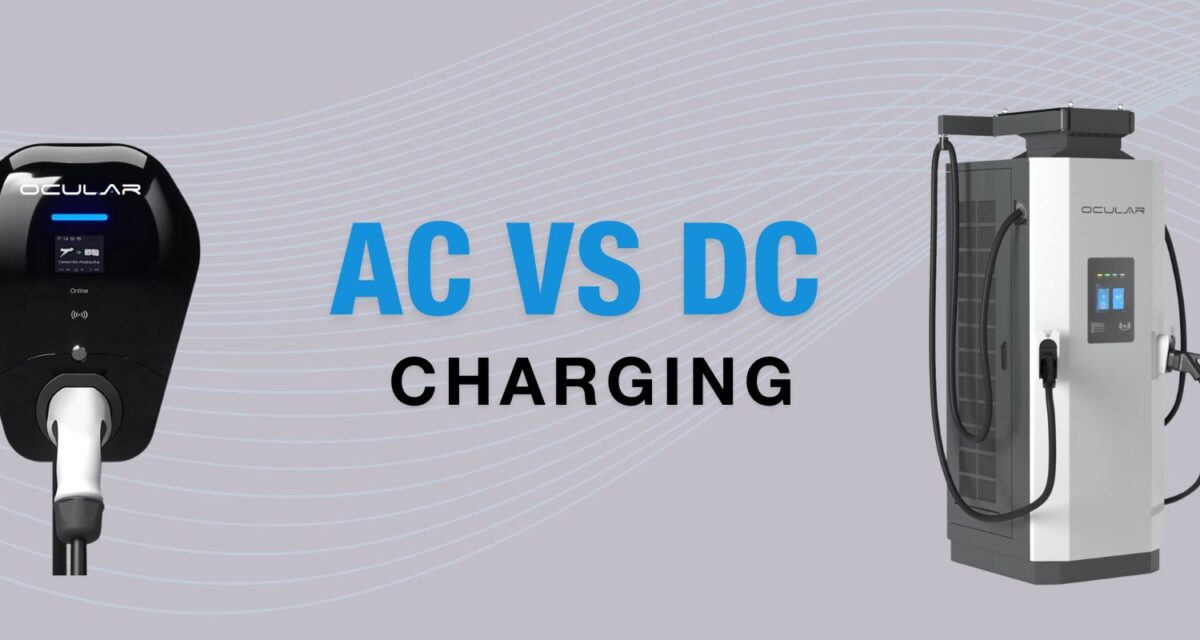
AC vs. DC charging is one of the most important distinctions EV drivers should understand when choosing a charger. Both methods ultimately deliver electricity to an EV battery, but they handle electrical power differently and are designed for different charging situations.
AC charging is the standard approach for most home and destination charging. It generally provides slower charging but works well when a vehicle will remain parked for several hours. DC charging, particularly DC fast charging, converts electricity before it reaches the vehicle and can deliver much higher power, making it the preferred option for many public charging stops and long-distance travel.
Understanding the difference between AC and DC charging can help drivers choose the right equipment, estimate charging times, understand connector requirements, and avoid paying for charging speed they do not need.
What Is AC Charging for an EV?
AC charging supplies alternating current from the electrical grid to the EV. The vehicle’s onboard charger then converts that AC electricity into DC electricity that can be stored in the battery.
AC charging is used for both Level 1 and Level 2 charging. Level 1 typically uses a 120-volt household outlet, while Level 2 generally uses 208- or 240-volt electrical service. The U.S. Department of Energy’s Alternative Fuels Data Center identifies Level 1 and Level 2 as the primary AC charging categories.
Because AC charging relies on the vehicle’s onboard charger to perform the conversion, the vehicle’s onboard charging capability is an important factor in determining how quickly it can charge.
How Fast Is AC Charging?
AC charging speeds vary considerably.
Level 1 is the slowest option. The DOE estimates that Level 1 can add roughly 2–5 miles of driving range per hour, depending on the vehicle and charging conditions. Level 2 is considerably faster, with the DOE estimating approximately 10–30 miles of range per hour.
A Level 2 charger can have a power output ranging from about 2.9 kW to 19.2 kW, but an EV may not be able to use the full output. The vehicle’s onboard charger establishes the maximum AC charging rate it can accept.
For many drivers, that makes Level 2 the practical choice for overnight home charging.
What Is DC Charging for an EV?
DC charging works differently. Instead of sending AC electricity to the vehicle for conversion by its onboard charger, a DC fast-charging station converts grid electricity into DC power within the charging equipment and delivers it directly to the vehicle’s battery system.
This allows DC charging equipment to bypass the vehicle’s onboard AC charger and provide much higher charging power.
The DOE describes DC fast charging as equipment capable of rapid charging along major travel corridors, with modern installations reaching power outputs of up to 500 kW. The actual charging rate depends on the vehicle and charging equipment.
DC fast charging is therefore primarily associated with public charging rather than routine residential charging.
What Is the Main Difference Between AC and DC Charging?
The fundamental difference is where the conversion from AC electricity to DC electricity takes place.
With AC charging, the electricity reaches the vehicle as AC and the vehicle’s onboard charger converts it to DC for the battery. With DC charging, the charging station performs the conversion before delivering DC electricity to the vehicle.
That difference enables DC fast chargers to deliver much more power than typical AC charging equipment.
The result is a trade-off: AC charging is generally simpler and better suited to long parking periods, while DC charging requires more powerful charging infrastructure but can replenish substantial range much more quickly.
AC vs. DC Charging Speed
Charging speed is usually the biggest difference drivers notice.
The DOE estimates that Level 1 can add around 2–5 miles of range per hour, Level 2 around 10–30 miles per hour, and DC fast charging around 100–200+ miles of range in 30 minutes. These figures are estimates rather than guaranteed results.
Actual charging speed depends on several factors, including battery capacity, state of charge, battery temperature, vehicle charging capability, charger power and the charging curve.
For example, an EV connected to a 350-kW DC fast charger will not necessarily receive 350 kW. If the vehicle can accept only a lower charging rate, the station cannot force it to charge faster.
Charging power can also decrease as the battery becomes fuller. Consequently, the fastest charging experience usually occurs during part of the charging session rather than throughout the entire session.
AC vs. DC Charging at Home
AC charging is the standard choice for home EV charging.
The DOE states that most EV drivers charge at home overnight using AC Level 1 or Level 2 equipment. Level 1 can work for drivers with relatively low daily mileage, while Level 2 provides faster charging for drivers who need to replenish more energy during overnight parking.
Level 1 can often use an existing 120-volt outlet, although the outlet and circuit need to be suitable for the charging application.
Level 2 generally requires a 240-volt circuit and may require electrical upgrades and professional installation. The additional installation cost can be worthwhile for drivers who regularly need faster overnight charging.
DC fast charging is generally not practical for routine home use. Its infrastructure is more complex and expensive, and most EV drivers do not need to charge at high power every night.
AC vs. DC Charging for Road Trips
DC fast charging is usually the better choice for long-distance EV travel.
When traveling hundreds of miles, drivers generally do not want to spend several hours at every charging stop. DC fast chargers can add substantial range during shorter stops, making them well suited to highways and major travel corridors.
AC Level 2 charging can still be useful during road trips when a vehicle will remain parked for several hours. Hotels, workplaces, shopping centers and other destinations can provide Level 2 charging while the driver is already stopped.
A practical road-trip strategy may therefore combine both types: DC fast charging when speed matters and AC charging when the vehicle will be parked for an extended period.
AC vs. DC Charging Costs
AC charging is not automatically cheaper in every situation, but home AC charging is often less expensive than public DC fast charging.
Home charging costs are primarily determined by the local electricity rate, while public charging can include network-specific pricing, session fees, time-based rates or other charges.
DC fast charging infrastructure is also more expensive to install and operate. The DOE notes that DC charging equipment has higher equipment and infrastructure requirements than lower-power AC charging.
However, cost per kWh should not be the only consideration. DC fast charging can save significant time, which may be valuable during a road trip or when a driver needs additional range quickly.
For current public charging prices, drivers should check the specific station or network app because rates can vary by location and time.
AC vs. DC Charging Connectors
Connector compatibility is another important consideration.
In North America, Level 1 and Level 2 charging commonly use SAE J1772 or the SAE J3400 connector, depending on the vehicle and equipment. DC fast charging can use CCS, CHAdeMO or J3400/NACS.
SAE J3400 is particularly important to understand because the standardized connector is capable of transferring both AC and DC power. SAE’s J3400 standard covers conductive power transfer for both AC single-phase and DC charging.
This means the connector shape alone does not always tell you whether a charging session is AC or DC. Drivers should check the charging station’s specifications and confirm that the connector and charging method are compatible with their EV.
Adapters can also expand charging options for some vehicles, but compatibility and supported power levels vary by vehicle and adapter.
Does DC Charging Damage an EV Battery?
Using DC fast charging does not inherently mean that an EV battery will be damaged.
Modern EVs use battery-management systems to control charging power, temperature and other conditions. The vehicle can reduce charging power when necessary to protect the battery.
However, charging behavior can influence long-term battery aging. Drivers should follow the vehicle manufacturer’s recommendations regarding frequent high-power charging and battery state-of-charge limits.
For everyday charging, many drivers can rely on AC Level 1 or Level 2 charging and use DC fast charging when speed is more important.
The key point is that DC fast charging is a normal, supported charging method for EVs designed to accept it. Drivers should use compatible equipment and follow the manufacturer’s charging guidance.
Which Is More Efficient: AC or DC Charging?
It is difficult to say that one method is universally more efficient because charging efficiency depends on the vehicle, equipment, power level and operating conditions.
AC charging requires the vehicle’s onboard charger to convert AC electricity into DC. DC fast charging performs that conversion within the charging station before sending DC electricity to the battery.
Energy losses occur during charging regardless of the method. Temperature, battery condition, charging power and other electrical factors can affect the amount of energy drawn from the grid compared with the amount stored in the battery.
For drivers, the more useful question is often which charging method provides the appropriate balance of speed, cost and convenience for a particular situation.
Can Every EV Use Both AC and DC Charging?
Most modern battery-electric vehicles can use AC charging, while DC fast-charging capability depends on the vehicle.
The DOE notes that commercially available EVs in the United States can use Level 1 and Level 2 charging equipment. Most battery-electric vehicles also support DC fast charging, but capability and maximum charging power vary by model. Many plug-in hybrid vehicles do not support DC fast charging.
Before using a DC fast charger, drivers should check their vehicle’s specifications and connector requirements.
An EV charging directory can also help drivers identify compatible charging stations by connector type, charging speed, network and location.
AC vs. DC Charging: Which Should You Use?
The right option depends primarily on how long your vehicle will be parked.
AC charging is generally the better choice when the vehicle will remain parked for several hours. Level 1 may be enough for lower-mileage drivers, while Level 2 is often more convenient for regular home charging.
DC fast charging is better when charging time is limited. It is particularly useful for road trips, highway travel and situations where a driver needs to add significant range quickly.
Rather than choosing the fastest charger available every time, consider your actual need. If the vehicle will sit overnight, a Level 2 charger may provide everything necessary. If you have 20–30 minutes before continuing a long trip, DC fast charging may be far more practical.
How AC and DC Charging Fit Into Everyday EV Ownership
AC and DC charging are complementary rather than competing technologies.
AC charging is the foundation of routine EV charging because vehicles can remain connected for long periods at home, work or destinations. DC fast charging fills a different role by providing rapid energy replenishment when drivers cannot wait several hours.
For most EV owners, an effective charging strategy combines both. Use AC charging when time is available and DC fast charging when speed matters.
Understanding the difference also makes it easier to compare charging stations, select the right connector, estimate charging times and find appropriate charging options through an EV charging directory.
Frequently Asked Questions
What is the difference between AC and DC charging?
AC charging sends alternating current to the EV, where the vehicle's onboard charger converts it to DC for the battery. DC fast charging performs the conversion in the charging station and delivers DC power directly to the battery, allowing much higher charging power.
Is AC or DC charging faster?
DC charging is generally much faster. The DOE estimates approximately 10–30 miles of range per hour for Level 2 AC charging compared with approximately 100–200+ miles in 30 minutes for DC fast charging. Actual results depend on the vehicle and charger.
Is AC charging better for everyday EV charging?
For many drivers, yes. AC Level 1 or Level 2 charging is well suited to overnight and destination charging because the vehicle can remain parked for several hours.
Is DC fast charging more expensive than AC charging?
Public DC fast charging can be more expensive than home AC charging, but prices vary by network and location. DC fast charging also provides significantly faster charging, which can justify the additional cost when time is important.
Can I use DC fast charging every day?
An EV can be designed to support regular DC fast charging, but drivers should follow the manufacturer's recommendations for charging frequency and battery management. For routine charging, AC charging is often more convenient when the vehicle has several hours to remain parked.
Does DC fast charging hurt EV batteries?
DC fast charging does not inherently damage a compatible EV battery. The vehicle's battery-management system controls charging conditions and can reduce power when necessary. Battery aging is influenced by multiple factors, so drivers should follow the manufacturer's charging recommendations.
What connectors are used for AC and DC charging?
AC charging in North America commonly uses J1772 or J3400/NACS, while DC fast charging can use CCS, CHAdeMO or J3400/NACS. Connector availability varies by vehicle and charging station.
Should I choose AC or DC charging for a road trip?
DC fast charging is generally the better choice when you need to add substantial range quickly. Level 2 AC charging can be useful at hotels, restaurants, workplaces and other destinations where you plan to stay for several hours.
No reviews yet — be the first to share your experience.