
How Fast EV Charging Works: A Complete Beginner’s Guide
By Staff Writer · September 22, 2026
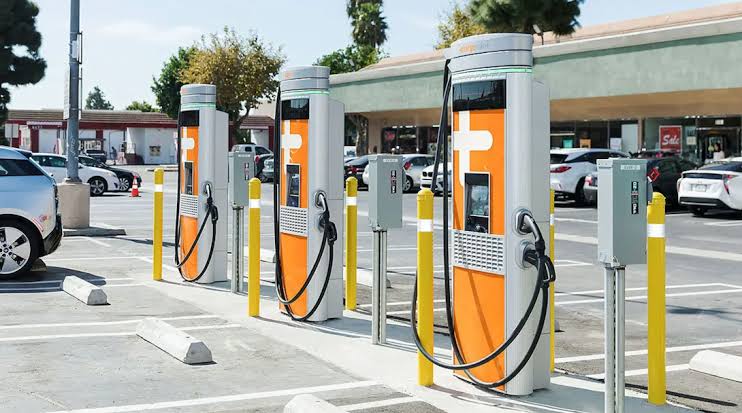
Fast EV charging is one of the biggest reasons electric vehicles have become practical for long-distance travel. Instead of waiting several hours to recharge, modern EVs can often recover a substantial amount of driving range during a short stop. While the process may seem as simple as plugging in, fast charging involves sophisticated communication between the vehicle and the charging station to deliver electricity safely and efficiently.
Understanding how fast EV charging works helps drivers make better charging decisions, reduce waiting times, protect battery health, and get the best performance from public charging stations. This guide explains the complete fast charging process, why charging speeds change, and what factors affect real-world charging performance.
What Is Fast EV Charging?
Fast EV charging refers to DC fast charging, also known as Level 3 charging. Unlike home charging, which supplies alternating current that the vehicle converts internally, DC fast chargers perform the power conversion inside the charging station and deliver direct current straight to the battery.
This approach allows significantly higher charging power than Level 1 or Level 2 charging, making it ideal for highway travel, road trips, commercial fleets, and drivers who need a quick recharge away from home.
Rather than replacing home charging, fast charging complements it by providing rapid energy replenishment when time matters most.
The Difference Between AC and DC Charging
Understanding the difference between alternating current and direct current explains why fast charging is so much quicker.
Electricity from homes and most businesses is delivered as alternating current. During Level 1 and Level 2 charging, the vehicle’s onboard charger converts that electricity into direct current before it reaches the battery.
DC fast chargers eliminate this step by converting the electricity inside the charging station itself. Because these chargers contain much larger power electronics than the vehicle’s onboard charger, they can deliver far more electricity to the battery in a shorter period.
This external conversion is what makes fast charging dramatically quicker than standard charging.
What Happens When You Plug In?
A fast charging session begins long before electricity starts flowing.
As soon as the charging connector is plugged into the vehicle, the charger and the EV begin exchanging information electronically. This communication ensures that both systems agree on how charging will proceed before high-voltage power is delivered.
The vehicle shares important information with the charger, including its battery’s current charge level, temperature, voltage requirements, maximum charging capability, and safety status.
The charging station uses this information to determine how much power it can safely deliver throughout the session.
Only after these safety checks are completed does charging begin.
Step-by-Step: How Fast EV Charging Works
The charging process follows a carefully controlled sequence.
First, the driver connects the charging cable. The vehicle and charger establish communication and verify compatibility. Safety systems confirm that the connection is secure and that no electrical faults are present.
Next, the charger begins delivering electricity at a lower level before gradually increasing power. As the battery warms and reaches optimal operating conditions, charging speed often rises toward its maximum.
Throughout the session, both the vehicle and the charger continuously monitor voltage, current, and temperature. If conditions change, charging power adjusts automatically.
Finally, when the battery reaches the desired charge level or the driver stops the session, power is reduced before the connector unlocks safely.
The entire process typically happens automatically without requiring any technical knowledge from the driver.
Why Charging Starts Slowly
Many drivers expect maximum charging speed immediately after plugging in, but that rarely happens.
The charger usually increases power gradually while confirming that the battery is ready to accept higher charging rates. This brief ramp-up period allows the battery management system to stabilize voltage and temperature before reaching higher power levels.
If the battery is particularly cold or hot, charging may increase more slowly until conditions improve.
Understanding the Charging Curve
One of the most important concepts in fast charging is the charging curve.
Unlike filling a gasoline tank, battery charging does not happen at one constant speed. Instead, charging speed changes throughout the session.
During the early part of charging, the battery can usually accept electricity quickly. This is often when charging reaches its highest power.
As the battery fills, charging gradually slows. Once the battery reaches around 80 percent, charging often becomes noticeably slower.
This slowdown is intentional. The battery management system reduces power to minimize heat buildup and help preserve long-term battery health.
For many drivers, stopping around 80 percent during road trips results in the shortest overall travel time.
Why Batteries Cannot Charge at Maximum Speed Forever
Lithium-ion batteries become more sensitive as they approach full charge.
When battery cells are nearly full, charging them too aggressively could generate excessive heat and place additional stress on the battery.
Instead, the battery management system carefully reduces charging power while balancing individual cells inside the battery pack.
This controlled approach helps maintain battery performance over many years of use.
What Is Battery Preconditioning?
Battery temperature has a major impact on charging performance.
Battery preconditioning prepares the battery before arriving at a fast charger by warming or cooling it to its ideal operating temperature.
Many modern electric vehicles automatically begin preconditioning when a compatible fast charger is entered into the navigation system.
A properly conditioned battery can often charge more quickly than one that arrives too cold or too hot.
How Temperature Affects Fast Charging
Temperature influences nearly every aspect of battery performance.
Cold batteries typically charge more slowly because chemical reactions inside the cells become less efficient. Extremely hot batteries may also reduce charging speed to prevent overheating.
Battery thermal management systems continuously monitor temperature and use heating or cooling systems to keep the battery within an optimal range whenever possible.
This temperature control helps maintain both charging performance and battery longevity.
How Much Power Can a Fast Charger Deliver?
Fast chargers come in several power levels.
Earlier DC fast chargers commonly delivered around 50 kilowatts, while many modern highway chargers provide between 100 and 150 kilowatts. Ultra-fast chargers capable of 250 kilowatts or more are becoming increasingly common along major travel corridors.
However, the charger’s rating does not guarantee that every vehicle will charge at that speed.
The vehicle itself determines how much power it can safely accept.
Why Your EV May Charge Slower Than the Charger Rating
Many first-time EV owners are surprised when their vehicle charges below the number displayed on the charging station.
Several factors determine actual charging speed.
The vehicle’s maximum charging capability sets an upper limit. Battery temperature affects performance. The battery’s current charge level influences how much power it can safely accept. Weather conditions can reduce charging speed, and some charging stations may temporarily share power between multiple vehicles.
Real-world charging performance is therefore a combination of charger capability and vehicle conditions.
How Connectors Affect Fast Charging
Connector compatibility determines whether an EV can use a particular charging station.
NACS
The North American Charging Standard has become the emerging charging connector across the United States and Canada. Originally developed by Tesla, it supports both AC and DC charging through one compact connector and is being adopted by many vehicle manufacturers.
CCS
The Combined Charging System remains one of the most widely available DC fast charging connectors. It continues serving millions of existing electric vehicles across North America and remains common on many public charging networks.
CHAdeMO
CHAdeMO primarily supports older electric vehicles, particularly earlier versions of the Nissan LEAF. Although still available in some locations, new CHAdeMO installations have become much less common.
How Charging Stations Communicate with Your EV
Fast charging involves constant communication between the vehicle and the charger.
Instead of delivering a fixed amount of electricity, the charger continuously receives updates from the vehicle about battery conditions.
The vehicle requests more or less power as needed, and the charger responds accordingly.
This ongoing communication allows charging to remain both fast and safe throughout the session.
If the battery becomes too warm or another condition changes, charging speed automatically adjusts without requiring driver intervention.
What Is Plug and Charge?
Plug and Charge is a technology that simplifies public charging.
Instead of opening an app or tapping a payment card, compatible vehicles automatically authenticate with participating charging stations after the connector is plugged in.
The charging session begins automatically, creating an experience similar to using a Tesla Supercharger.
As more vehicles and charging networks adopt this technology, public charging is becoming increasingly convenient.
How Fast Charging Protects Battery Health
Many people worry that fast charging damages electric vehicle batteries.
Modern EVs are designed with sophisticated battery management systems that actively protect the battery during charging.
These systems monitor temperature, voltage, current flow, and individual battery cells while adjusting charging power whenever necessary.
Fast charging is considered a normal part of EV ownership, although many drivers still use Level 2 charging for everyday needs while relying on DC fast charging for travel and occasional quick charging.
Common Fast Charging Mistakes
New EV owners often make mistakes that unnecessarily increase charging time.
Arriving at a charger with the wrong connector type can prevent charging altogether. Charging to 100 percent during every road trip usually adds unnecessary waiting time because charging slows significantly near full capacity. Ignoring battery preconditioning can reduce charging performance, especially in cold weather.
Checking charger compatibility and planning charging stops ahead of time can make the experience much smoother.
Tips for Faster Charging Sessions
A few simple habits can improve charging efficiency.
Arriving with a relatively low battery often allows higher charging speeds. Using navigation to activate battery preconditioning can improve performance before reaching the charger. Stopping around 80 percent during long trips usually minimizes overall travel time because charging slows considerably afterward.
Choosing higher-powered chargers when your vehicle supports them can also reduce charging time.
The Future of Fast EV Charging
Fast charging technology continues advancing rapidly.
Charging networks are expanding across highways, urban areas, and commercial locations. More automakers are adopting NACS, making charging more standardized across different brands. Higher-powered chargers, improved battery cooling systems, and smarter charging software are reducing charging times while helping preserve battery health.
Future battery technologies may shorten charging sessions even further, bringing electric vehicle charging closer to the convenience of traditional refueling while maintaining the advantages of electric transportation.
Why Understanding Fast EV Charging Matters
Learning how fast EV charging works helps drivers use public charging more efficiently and confidently. Once you understand how charging stations communicate with your vehicle, why charging slows near full capacity, and how battery temperature affects performance, it becomes much easier to plan successful charging stops.
Whether you’re taking your first EV road trip or simply learning more about public charging, understanding the technology behind DC fast charging allows you to save time, reduce range anxiety, and get the best possible performance from today’s growing network of fast charging stations.
No reviews yet — be the first to share your experience.